
Dell SafeBIOS Explained: Off-Host BIOS Verification for Tamper Detection
Firmware is the most privileged code on any system, and it is the layer most security tooling never inspects. The BIOS runs before the operating system, before the hypervisor, and before endpoint detection agents ever load. An attacker who plants malicious code there gets execution that survives OS reinstalls, disk wipes, and most remediation playbooks. For federal, DoD, SLED, and healthcare environments operating under NIST 800-171 and supply-chain integrity mandates, that is exactly the blind spot adversaries probe. Dell SafeBIOS is built to close it.
Why BIOS-level attacks bypass your existing stack
Traditional endpoint and server defenses assume a trustworthy boot. Antivirus, EDR, and host-based intrusion detection all run inside the operating system, so they can only observe what happens after control is handed off. If the BIOS itself has been altered, the OS — and everything monitoring it — inherits a compromised foundation. Worse, malware operating below the OS can hide its own presence from anything running above it.
This is not theoretical. Firmware implants are a recognized concern across federal supply-chain risk management programs, and BIOS integrity is explicitly addressed in NIST platform-firmware resilience guidance. The challenge has always been verification: how do you trust a measurement of the BIOS when the thing reporting that measurement might be the compromised BIOS lying to you? A system asked to validate itself is a system you cannot fully trust.
How SafeBIOS off-host verification works
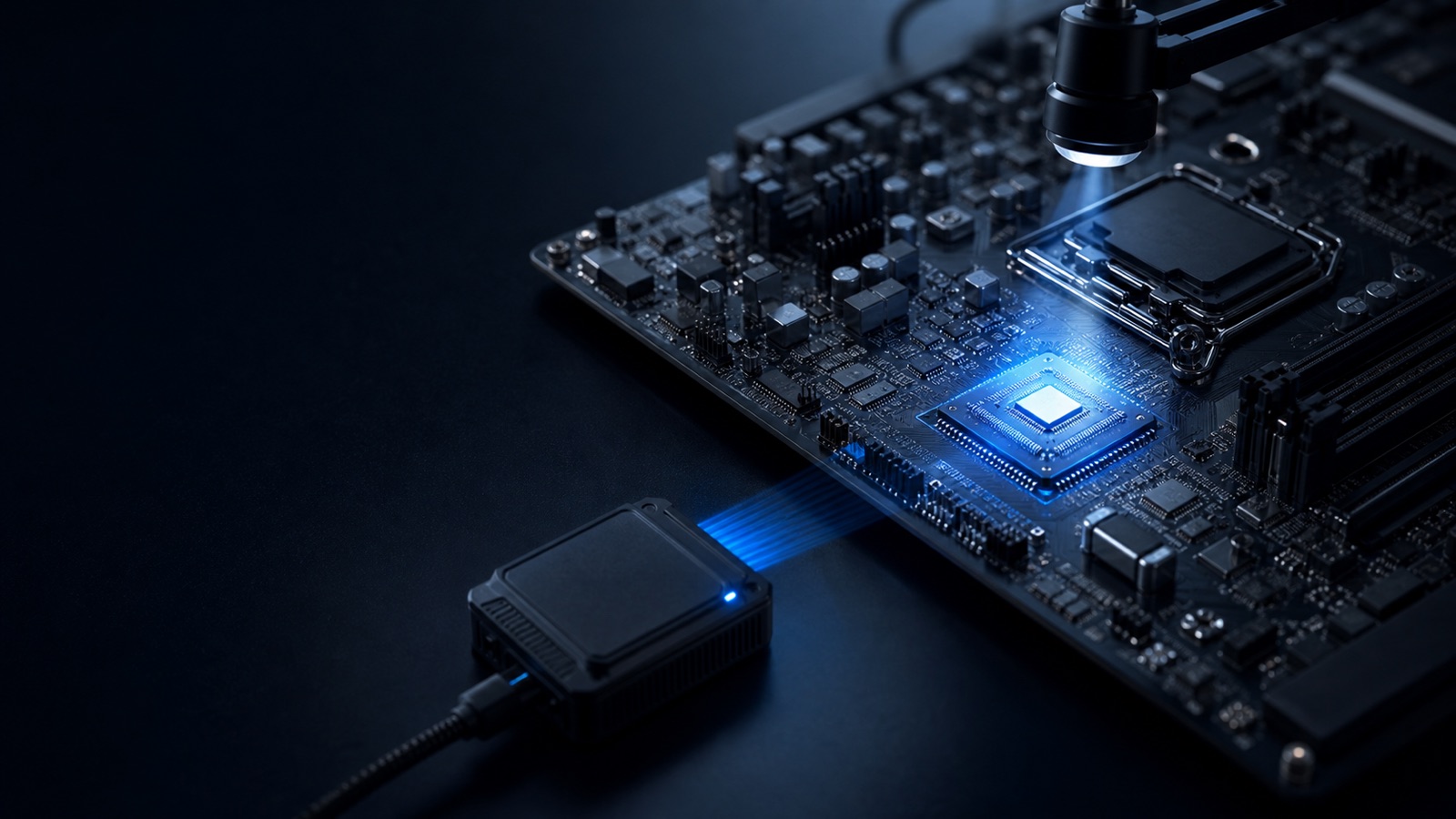
Dell's answer is to move the verification off the host entirely. SafeBIOS captures a measurement of the BIOS image and compares it against a known-good copy that Dell maintains in a secure, isolated cloud environment — not on the device being checked. Because the comparison happens off-platform, a compromised BIOS cannot tamper with or spoof its own integrity result. The verifier and the verified are separated.
The flow looks like this in practice:
- SafeBIOS generates a cryptographic measurement of the running BIOS configuration and image.
- That measurement is sent off-host to Dell's secure verification environment for comparison against the validated golden image for that platform and BIOS revision.
- A pass or fail result is returned to the administrator, surfacing any deviation that indicates tampering or corruption.
On PowerEdge servers such as the R660 and R760, this integrity story is anchored in silicon. The boot process is rooted in an immutable, silicon-based Root of Trust, and the iDRAC9 service processor provides an out-of-band path to observe and report platform integrity independent of the host OS. SafeBIOS verification results flow into the same management plane administrators already use, and OpenManage Enterprise lets you monitor BIOS integrity across a fleet rather than one node at a time. On commercial endpoints — Latitude laptops, Precision workstations, and OptiPlex desktops — the same off-host verification model protects the devices your workforce actually touches, which is frequently where initial compromise begins.
Indicators of Attack: behavior, not just signatures
Off-host image verification tells you whether the BIOS matches a known-good copy. SafeBIOS Indicators of Attack (IoA) goes a step further by watching for the behaviors and configuration changes that precede or accompany a firmware compromise. Rather than waiting for a signature match, IoA flags suspicious activity targeting the BIOS — the kind of reconnaissance and manipulation an attacker performs while trying to establish persistence below the OS.
Indicators of Attack matters because firmware threats evolve faster than signature databases. By focusing on attacker techniques against BIOS settings and platform configuration, IoA can surface a compromise attempt that has no known signature yet. For security teams, the practical value is:
- Earlier detection — catching manipulation during the attack rather than after persistence is established.
- Telemetry that feeds existing SIEM and security operations workflows, so firmware events sit alongside the rest of your alerting.
- Visibility into configuration drift on BIOS settings that should never change in a hardened build.
Combined, off-host verification answers "is my BIOS still the BIOS Dell shipped?" while IoA answers "is something trying to change it right now?" Detection at both the state and behavior level is what separates SafeBIOS from a simple checksum.
Where this fits in a federal and regulated deployment
For contracting officers and IT decision-makers, SafeBIOS supports the controls auditors actually ask about. Platform firmware integrity maps directly to NIST 800-171 system-integrity and configuration-management requirements, and to broader supply-chain risk management expectations across DoD and civilian agencies. Dell's silicon Root of Trust and cryptographically signed firmware updates extend the chain of trust from manufacturing through every update cycle, which matters when you must demonstrate provenance for the gear you acquire. TAA-compliant procurement and FIPS 140-3 validated cryptographic modules round out the posture many of these programs require.
A few practical notes for planning a deployment:
- SafeBIOS off-host verification and IoA are features of Dell's commercial and PowerEdge platforms; confirm the specific capability set for each model and BIOS revision during procurement.
- Integrate BIOS integrity results into your existing OpenManage and SIEM monitoring so firmware health is reviewed on the same cadence as the rest of the fleet.
- Treat BIOS settings as a managed, version-controlled configuration item — IoA is far more useful when you have a defined hardened baseline to deviate from.
The takeaway
The BIOS is the one layer your OS-based security tools cannot vouch for, and that is precisely why attackers target it. Dell SafeBIOS removes the self-attestation problem by verifying the BIOS off-host against a known-good image, then layers Indicators of Attack on top to catch tampering as it happens — both below the operating system, where conventional defenses are blind. For regulated and mission environments, that is a concrete, auditable improvement to platform integrity, not a checkbox.
If you are scoping PowerEdge servers or refreshing a Latitude, Precision, or OptiPlex fleet and want firmware integrity baked into the buy, Uniqcli can help you spec and source it, quoted by RFQ. Request a quote or talk to a Uniqcli specialist to get started.