
PowerEdge End-of-Life: Planning Your R660 and R760 Server Refresh
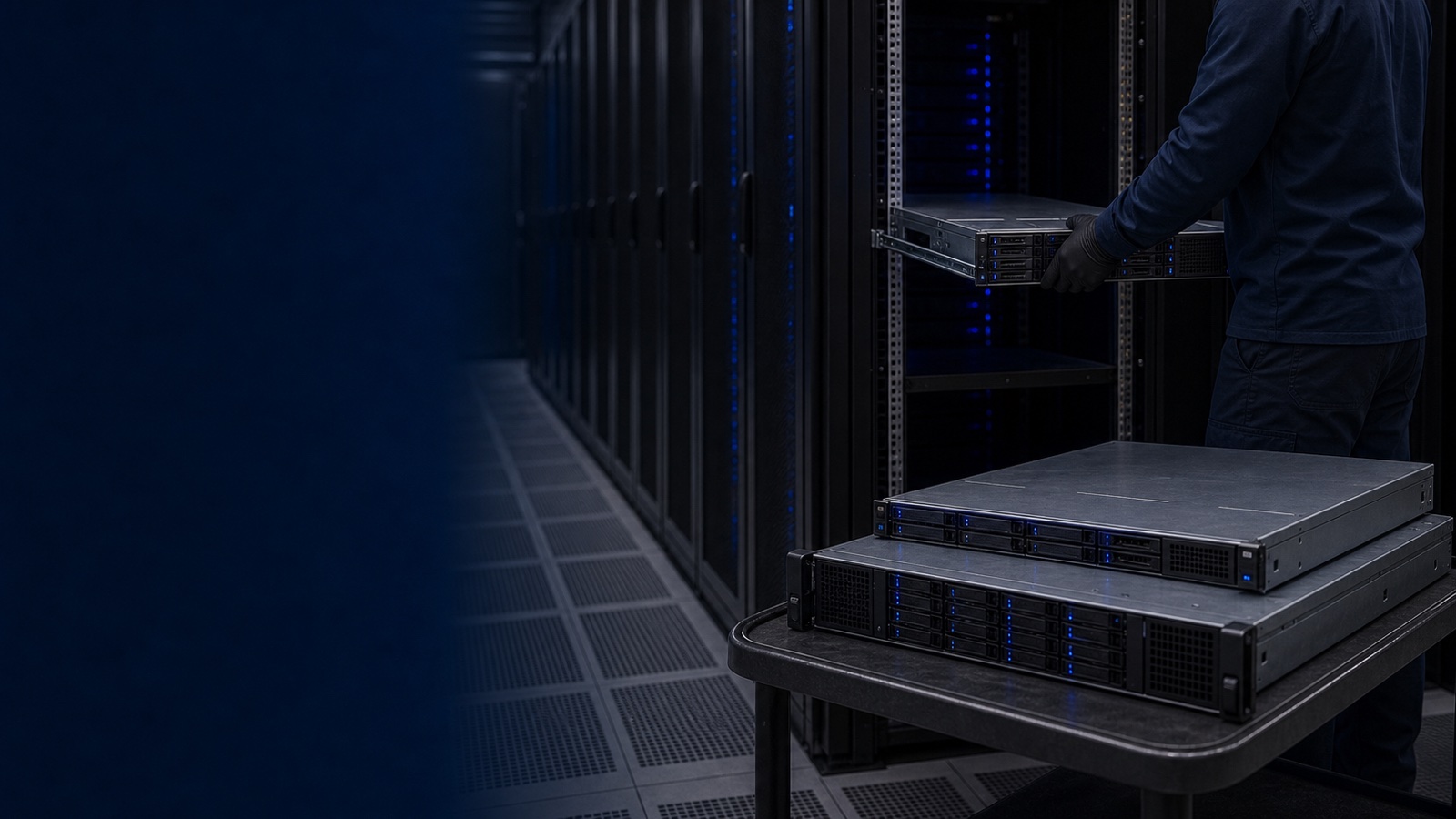
If a meaningful share of your rack still runs on previous-generation Dell PowerEdge servers, the clock is no longer hypothetical. Dell publishes a defined service lifecycle for every PowerEdge platform, and older 14th- and 15th-generation systems are now moving through their final support phases. A refresh to the current 16th-generation R660 and R760 is less about chasing the newest badge and more about staying ahead of support cliffs, rising power bills, and the security exposure that comes with unpatched firmware. This post lays out how to assess where you stand and how to plan a refresh that holds up to procurement scrutiny.
Understanding the PowerEdge Service Lifecycle
Dell defines distinct phases for each server generation. After general availability ends, a platform enters a multi-year support window, followed by an extended period where ProSupport and security firmware are still available, and finally End of Service Life (EOSL) — the point after which Dell no longer guarantees parts, firmware updates, or technical support.
The practical risk is not that a server stops working on its EOSL date. It is that once a platform passes that line, a failed drive backplane or a newly disclosed firmware vulnerability has no sanctioned fix. For regulated buyers — federal agencies under FISMA, healthcare organizations governed by HIPAA, or SLED institutions with audit requirements — running production workloads on unsupported hardware can become a direct compliance finding, not just an operational annoyance.
Assessing Your Exposure
Before you scope any purchase, inventory what you actually have. Dell's iDRAC and OpenManage Enterprise can export a complete fleet report including service tags, generation, and warranty status. Map each system against three questions:
- Where is it in the lifecycle? Look up each service tag on Dell's support site for its specific EOSL milestone. Group servers into "past EOSL," "within 18 months," and "comfortable."
- What does it run? A domain controller or an EHR database on aging hardware is a different risk profile than a lab box. Prioritize by workload criticality, not just age.
- What is it costing you? Older 14th-gen servers built on earlier Intel Xeon Scalable platforms draw substantially more power per unit of work than current Sapphire Rapids and Emerald Rapids generations. Energy and cooling are recurring costs that a refresh can meaningfully reduce.
Why the R660 and R760 Are the Logical Targets
The Dell PowerEdge R660 (1U) and R760 (2U) are the mainstream rack workhorses of the 16th generation, and they map cleanly onto the roles older R640/R740-class systems filled.
- R660 — a dense 1U dual-socket platform for virtualization hosts, web and application tiers, and VDI, where rack-unit efficiency matters.
- R760 — a 2U dual-socket platform with more drive bays, PCIe Gen5 expansion, and GPU capacity, suited to databases, consolidation, and AI-inference workloads at the edge of the data center.
Both support 4th- and 5th-generation Intel Xeon Scalable processors, DDR5 memory, and PCIe Gen5, which translates into consolidation: workloads that once spread across several older nodes often collapse onto fewer new ones, reducing licensing, power, and rack footprint at the same time.
A refresh is also the natural moment to modernize management. Dell CloudIQ gives you AIOps-driven health, capacity, and cybersecurity telemetry across the new fleet, and pairing the refresh with Dell PowerProtect for backup and recovery closes a gap that aging infrastructure often leaves open. If you are rethinking the operating model entirely rather than replacing tin one-for-one, Dell APEX offers the same PowerEdge engineering through a flexible consumption model.
Procurement and Compliance Considerations
For public-sector and regulated buyers, the how of acquisition matters as much as the what. New PowerEdge R660 and R760 systems are available TAA-compliant, which is a prerequisite for most federal purchases. As an authorized Dell Technologies reseller, Uniqcli can source these platforms and quote them by RFQ, keeping your acquisition inside an approved contract path and simplifying the audit trail.
A few practical steps to keep the project clean:
- Validate configurations against your actual workloads rather than carrying forward legacy specs. Memory and storage ratios that made sense five years ago are often wrong for current density.
- Plan a migration runway. Stagger the refresh so critical systems move first and you retain a fallback during cutover.
- Document data sanitization for the hardware you retire — a requirement under most compliance regimes and easy to overlook in the rush to deploy.
Bottom Line
End-of-life is a planning event, not an emergency — provided you start before the EOSL date forces your hand. Inventory your fleet, rank by risk, and standardize on R660 and R760 platforms that consolidate workloads while restoring full support and firmware coverage. Uniqcli can help you scope a TAA-compliant configuration and quote it by RFQ. Reach out for a fleet assessment before your next audit does it for you.