
Dell PowerEdge vs HPE ProLiant: A Head-to-Head for Enterprise Server Buyers
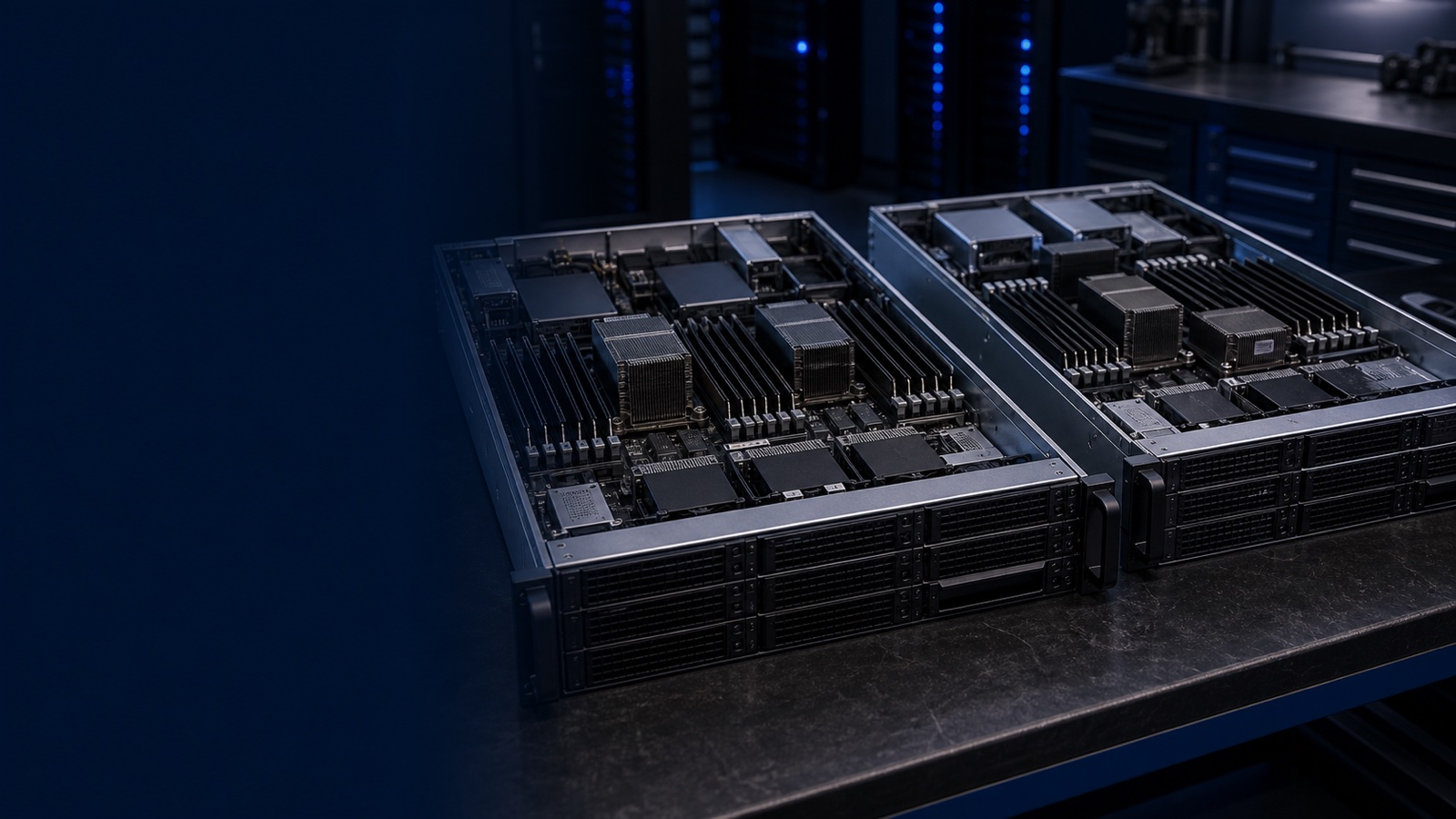
Dell PowerEdge and HPE ProLiant are the two x86 server lines that dominate enterprise and public-sector data centers. Both run the same Intel Xeon and AMD EPYC silicon, both ship in similar 1U and 2U rack form factors, and both will pass a checkbox-by-checkbox spec sheet comparison looking nearly identical. The real differences show up where servers actually cost you money and time: out-of-band management, firmware security, lifecycle support, and how you buy them. This is a head-to-head for buyers who have to live with the decision for five to seven years.
Out-of-Band Management: iDRAC vs iLO
Every server in a serious fleet is managed lights-out, and this is where the two platforms diverge most in day-to-day operation. Dell PowerEdge uses iDRAC (integrated Dell Remote Access Controller); HPE ProLiant uses iLO (Integrated Lights-Out). Both give you a dedicated baseboard management controller with remote KVM, virtual media, power control, and a Redfish-compliant API.
Where iDRAC pulls ahead for fleets is the surrounding tooling. Dell OpenManage Enterprise is a single console for inventory, firmware baselining, configuration drift detection, and alerting across an entire rack or estate. Pair it with iDRAC's lifecycle controller and you get:
- Agent-free firmware and driver updates pulled from a Dell repository, applied on a schedule
- Server configuration profiles you can export from one R660 and stamp onto a hundred others
- Zero-touch provisioning so a node racked by a remote hands tech configures itself against a known-good template
- Native plug-ins into VMware vCenter, Microsoft, Ansible, and Terraform
iLO with HPE OneView covers comparable ground, and which console "feels" better is partly a matter of what your team already knows. But if you are standardizing a new estate, OpenManage's repository-driven update model and free-tier iDRAC functionality are a genuine operational advantage rather than a marketing line.
Security and Supply Chain
For federal, DoD, and healthcare buyers, server security is not a feature — it is an acceptance criterion. Both vendors anchor their pitch on a hardware root of trust that verifies firmware before the BIOS runs, and both validate cryptographic modules against FIPS 140-3.
Dell's approach is built into the PowerEdge platform as the silicon-based root of trust, signed firmware enforced by the iDRAC, and a chassis intrusion and component-tampering detection chain that Dell calls Secured Component Verification — a certificate generated at the factory that lets you confirm the server you unboxed is the one that left the line. That last point matters for a 800-171 / supply-chain-risk posture, because it gives a contracting officer something concrete to point at.
Practical security questions to put to either vendor before you buy:
- Is firmware cryptographically signed and verified on every boot, with automatic recovery to a known-good image?
- Is there factory-to-rack supply-chain verification you can validate on receipt?
- Are the management controller and BIOS covered by a published, timely vulnerability-disclosure and patch cadence?
- Does the platform support secure, certificate-based erase and decommissioning?
Both lines answer these well. The differentiator is usually how cleanly the answer maps to your compliance framework and how fast patches reach you — which is as much about your reseller and support contract as the hardware.
Lifecycle and Support
A server's price tag is a fraction of its lifetime cost. Both Dell and HPE offer next-business-day, four-hour, and mission-critical support tiers, proactive telemetry-based case creation, and multi-year warranty extensions. The questions that actually separate them on a given deal:
- Parts availability and depot coverage in your specific geographies, including OCONUS sites if you support deployed users
- Length of guaranteed firmware and security-patch support after a model goes end-of-sale
- Trade-in and certified-disposal programs for the gear you are replacing
- How telemetry and "phone home" features are handled in air-gapped or classified environments — often the deciding factor for DoD workloads
Dell ProSupport and ProSupport Plus map predictably to these needs, and the PowerEdge lifecycle controller keeps update and inventory state on the server itself, which simplifies audits. Validate end-of-support dates in writing for the exact PowerEdge or ProLiant generation you are quoting; do not assume the line-level roadmap applies to your specific SKU.
Total Cost of Ownership and How You Buy
On a like-for-like R760 versus comparable ProLiant 2U configuration, acquisition cost is rarely the deciding factor — discounting on both sides is aggressive at volume. TCO is driven by power and cooling efficiency, rack density, management labor, and support tier. A platform that updates a hundred nodes agent-free from one console, and that lets one admin manage more servers, can outweigh a few points of hardware discount over a refresh cycle.
For public-sector buyers, the acquisition path is part of the comparison. Dell PowerEdge is widely available to federal, DoD, and SLED buyers, quoted by RFQ, with TAA-compliant configurations for covered programs. Buying through an authorized reseller on the right contract keeps the acquisition clean, the warranty intact, and the supply chain auditable — and it is where a partner adds real value beyond the box.
The Bottom Line
PowerEdge and ProLiant are both excellent, and neither is a wrong answer. Choose on the things that compound over five to seven years: fleet management at scale (OpenManage Enterprise plus iDRAC is a strong story for standardized estates), verifiable supply-chain security for compliance, end-of-support commitments in writing, and a clean acquisition path. If you are refreshing or standardizing and leaning Dell, talk to a Uniqcli specialist or request a quote — we will scope a TAA-compliant PowerEdge configuration, quoted by RFQ to fit your program.