
Immutable Backups with Dell PowerProtect: Defeating Ransomware Encryption
Why Backups Became the Primary Target
Modern ransomware campaigns no longer settle for encrypting production data and waiting for a ransom. The first move in a sophisticated intrusion is almost always reconnaissance against the backup environment. Attackers know that an organization with clean, recoverable backups will simply restore and refuse to pay. So they hunt for backup catalogs, dump credentials for the backup console, delete snapshots, and corrupt or encrypt the repository before they ever touch a production workload. By the time the encryption note appears, the recovery path is often already gone.
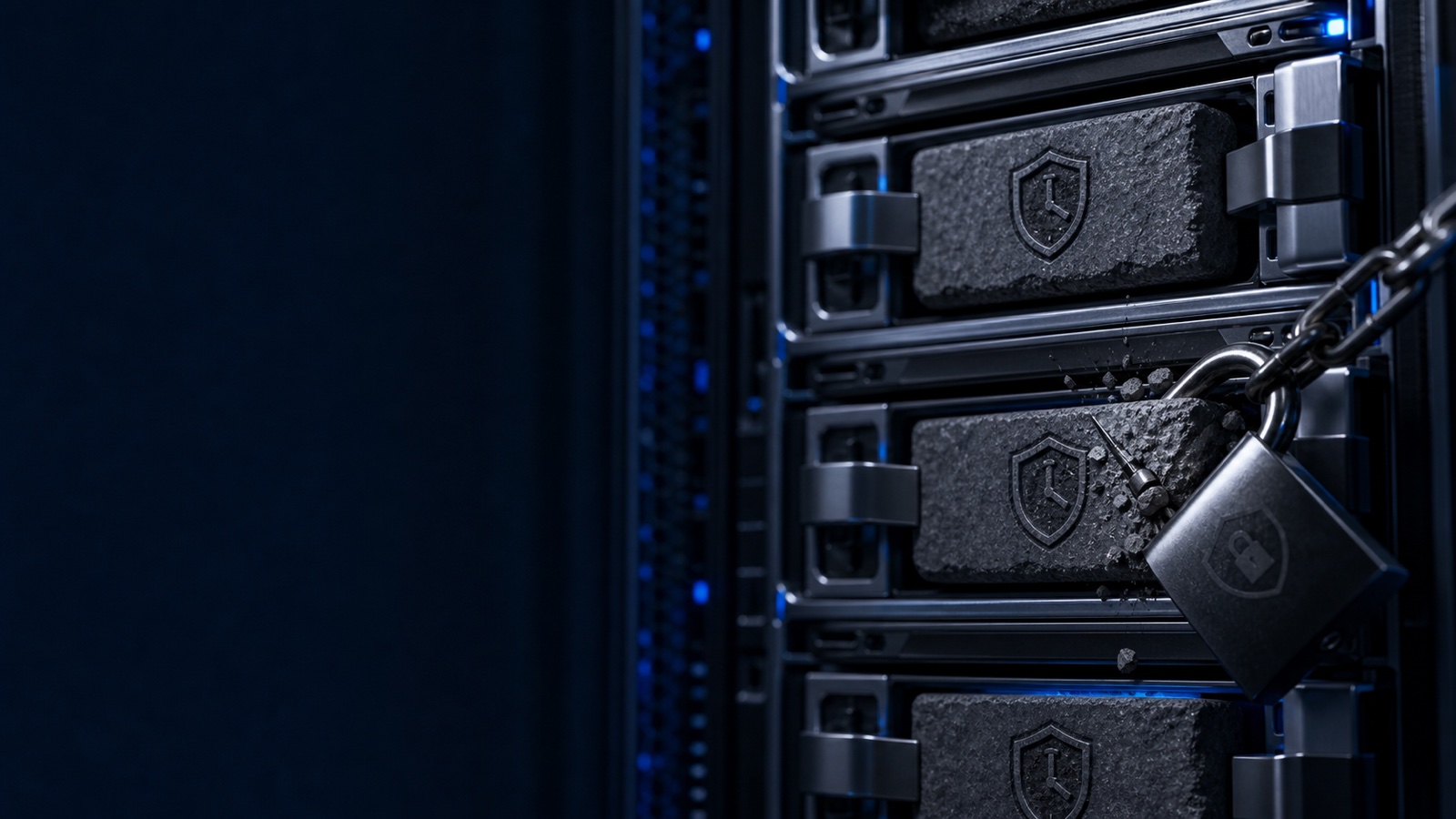
This is the threat model that immutability is built to defeat. An immutable backup is a copy that, once written, cannot be modified, encrypted, or deleted by any user, process, or administrator until a defined retention period expires. Not by the storage admin, not by a compromised service account, not by malware running with domain-admin privileges. For IT decision-makers, sysadmins, and contracting officers building a defensible recovery posture, immutable copies on Dell PowerProtect are the last line of defense that holds when everything else has been breached.
How PowerProtect Enforces Immutability
Dell's PowerProtect portfolio enforces immutability through Retention Lock, a capability native to PowerProtect DD series appliances (the platform formerly known as Data Domain) and orchestrated by PowerProtect Data Manager. Retention Lock comes in two flavors, and the distinction matters for compliance-driven buyers:
- Retention Lock Governance — A retention period is applied to backup files and can be reduced or removed by an authorized security officer if business requirements change. This is the right fit for operational ransomware resilience where some administrative flexibility is acceptable.
- Retention Lock Compliance — Designed to meet stringent regulatory standards. Once a file is locked, the retention period cannot be shortened or the data deleted by anyone, including Dell support, for the duration of the lock. Clock tampering is prevented through a dual-sign security-officer model, and the system blocks system-clock manipulation that could be used to prematurely expire data.
The protection is enforced at the storage layer, below the backup application. That separation is the entire point. Even if an attacker fully compromises PowerProtect Data Manager, the backup server, or the hypervisor, the locked copies sitting on the DD appliance cannot be altered because the immutability is enforced by the appliance's own filesystem and security-officer controls, not by the software that wrote the data.
Building a Defensible Architecture
Immutability is one control in a layered design. A resilient PowerProtect deployment for a federal or enterprise environment typically combines several mechanisms:
- Retention-locked copies on the primary PowerProtect DD appliance for fast operational recovery.
- Replicated, independently locked copies on a second DD appliance at a separate site, so a physical or logical compromise of one location does not take both copies.
- An isolated recovery environment using PowerProtect Cyber Recovery, which maintains a logically air-gapped vault. The replication link between production and the vault stays closed except during scheduled syncs, dramatically shrinking the window an attacker can use to reach the protected copy.
- CyberSense analytics within the Cyber Recovery vault, which inspects vaulted data for signs of corruption and encryption so teams can identify a known-good recovery point rather than restoring infected data.
Underneath all of this sits the hardware. PowerProtect DD appliances and the PowerEdge R660 and R760 servers that often host PowerProtect Data Manager and the broader data-protection stack ship with a hardware root of trust, signed firmware, and iDRAC with OpenManage for secure lifecycle management. Data at rest can be encrypted, and the DD Boost protocol moves backup data efficiently while keeping the appliance the authoritative enforcement point. Source workloads on PowerStore, PowerMax, or PowerScale integrate directly into PowerProtect Data Manager policies, so a single protection plan can span block, file, and unstructured data.
Mapping Immutability to Federal Requirements
For agencies and contractors, immutable backups are not just good hygiene — they map directly to frameworks that show up in audits and contract language. NIST 800-171 and the Cybersecurity Maturity Model Certification expect organizations to protect the confidentiality, integrity, and availability of controlled unclassified information, and a tamper-proof recovery copy is a concrete control toward the integrity and availability objectives. Dell PowerProtect DD appliances are available in FIPS 140-3 validated cryptographic configurations, which matters when encryption of backup data is part of the boundary you have to defend.
Procurement is straightforward for public-sector buyers. Dell PowerProtect, PowerEdge, and the associated storage platforms are available to federal, DoD, SLED, healthcare, and enterprise buyers, and TAA-compliant configurations are available for environments that require them. That means an immutable-backup project can move from architecture to award without inventing a new acquisition path.
Practical Takeaway
Ransomware operators succeed when they can reach your backups. Immutability takes that option away. Start by enabling Retention Lock on your PowerProtect DD appliances, choosing Governance or Compliance mode based on your regulatory posture, and set retention periods that exceed your realistic detection-to-recovery window. Replicate locked copies to a second site, and for high-value or mission-critical data, add a PowerProtect Cyber Recovery vault with CyberSense so you can prove a recovery point is clean before you restore. Validate restores on a schedule — an immutable backup you have never test-recovered is a theory, not a plan.
If you are designing or hardening a backup architecture for a federal, DoD, SLED, healthcare, or enterprise environment, the team at Uniqcli can help you size a PowerProtect deployment and quote it by RFQ. Request a quote or talk to a Dell data-protection specialist to get started.