Secured Component Verification: Proving Your Dell Hardware Wasn't Tampered in Transit
When a PowerEdge R660 lands on your dock, how do you know the server you ordered is the server that was built? Between the factory floor and your data center, hardware passes through integrators, freight forwarders, and warehouses — any of which is an opportunity for a component swap, a counterfeit DIMM, or a tampered controller. For DoD and federal buyers operating under NIST 800-171 and supply-chain risk management mandates, "we trust our shipper" is not an answer. Dell's Secured Component Verification (SCV) turns that trust into something you can cryptographically prove.
What Secured Component Verification Actually Is
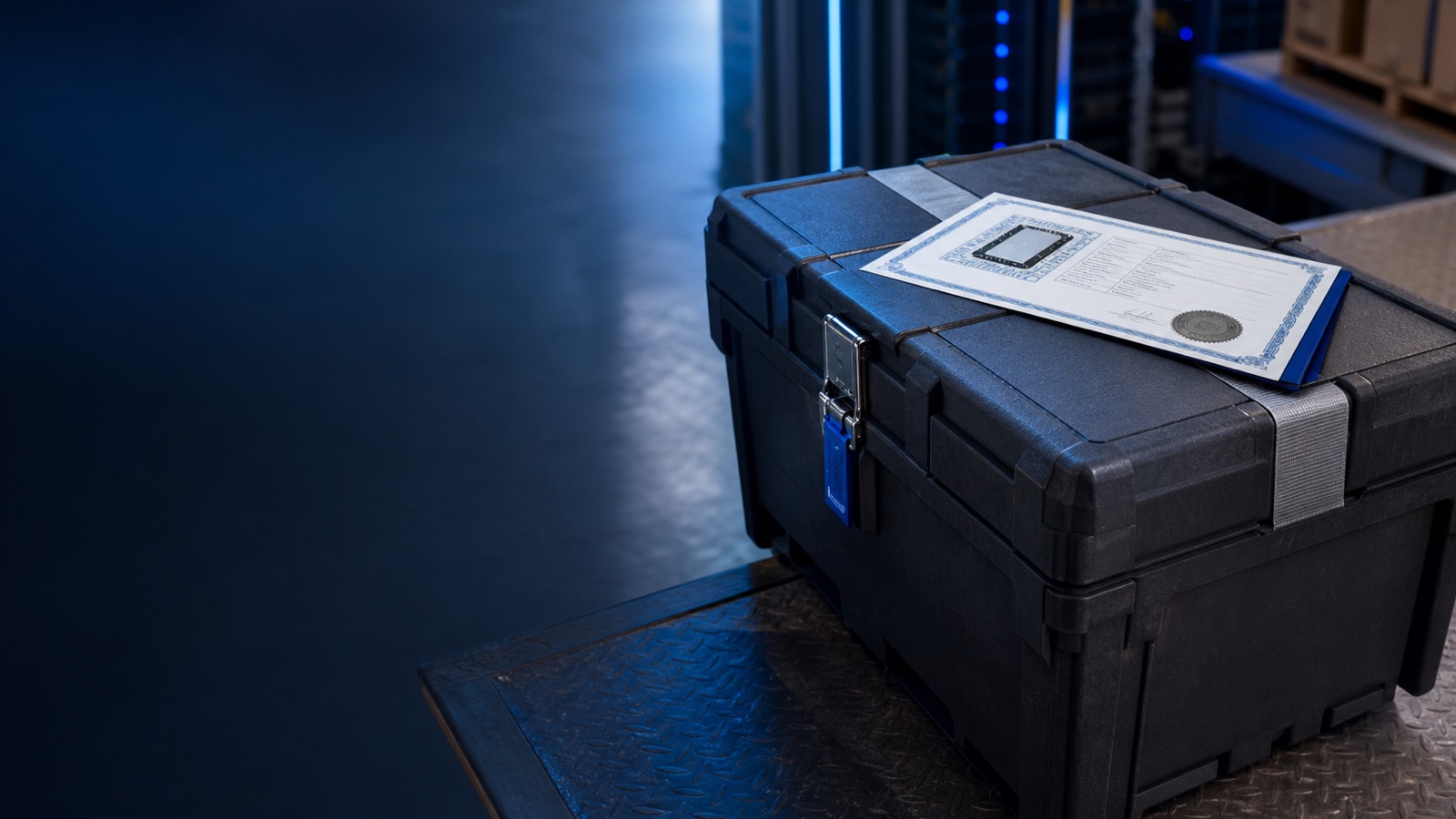
Secured Component Verification is a supply-chain assurance capability built into select Dell PowerEdge servers and commercial client systems. At the point of manufacture, Dell captures an inventory of the system's key components — processors, memory, storage devices, network controllers, and other identifiable parts — and binds that inventory into a digitally signed certificate. The certificate is generated against the as-built configuration and travels with the platform.
When the system arrives, you validate the live hardware against that signed manifest. If a component was added, removed, or substituted between the factory and your loading dock, the verification fails and tells you exactly where the mismatch is. There are two delivery models worth knowing:
- SCV on Cloud — the component certificate is held in a Dell-hosted environment and retrieved for validation when the platform is received.
- SCV on Device — the certificate is provisioned directly onto the platform, which suits air-gapped, classified, or disconnected environments where reaching an external service isn't an option.
For PowerEdge, validation runs against the iDRAC inventory; on commercial clients like Latitude, Precision, and OptiPlex, the equivalent verification confirms the device shipped with the components Dell recorded. Either way, the trust anchor is a signature you can check, not a packing slip you have to take on faith.
The Threat It Actually Closes
Supply-chain attacks against hardware are not hypothetical, and they don't require a movie-grade implant. The realistic failure modes are mundane and that's exactly why they're dangerous:
- A genuine module swapped for a counterfeit or lower-grade part during transit or integration.
- An unauthorized device inserted into an open slot somewhere along the chain.
- A "refurbished as new" substitution where used components are passed off as factory original.
- Tampering during third-party integration, kitting, or staging before final delivery.
SCV addresses the gap that perimeter security, FIPS 140-3 validated cryptographic modules, and secure boot simply weren't designed to cover: the integrity of the physical bill of materials as it was shipped. Secure boot tells you the firmware that runs is trusted. SCV tells you the silicon underneath it is the silicon Dell built. Those are different questions, and a serious assurance posture needs both answered.
Where SCV Fits in Your Compliance Story
For contracting officers and security leads, the value of SCV is that it produces evidence. NIST SP 800-171 and the broader supply-chain risk management (C-SCRM, per NIST 800-161) frameworks push agencies toward verifiable provenance and tamper-evidence for the systems handling controlled information. A signed component certificate is a concrete, auditable artifact you can attach to that requirement.
It also reinforces other layers of the Dell security model that DoD buyers already rely on:
- Silicon root of trust and cryptographically signed firmware on PowerEdge, anchoring the boot chain.
- iDRAC with platform-level monitoring, drift detection, and lifecycle logging.
- OpenManage for fleet-wide visibility into firmware, configuration, and inventory state over time.
- TAA-compliant sourcing and Section 889 considerations that you and your authorized partner manage at acquisition.
SCV doesn't replace any of these — it closes the one window they leave open, the transit gap between build and receipt. Paired with secure firmware and a documented root of trust, it lets you make a defensible statement: this system is the system we procured, and we can prove it.
Putting It Into Practice on Receipt
Operationally, SCV is a receiving-dock discipline, and it works best when it's written into procedure rather than improvised:
- Specify it at order time. SCV is a configuration option on supported PowerEdge and commercial platforms — it has to be elected when the system is built, so it belongs in your requirements, not your wish list.
- Validate before the system enters production. Run verification at intake, before the platform is racked, imaged, or joined to a domain. A mismatch caught on the dock is an incident report; one caught after deployment is a breach investigation.
- Capture the result as an artifact. Store the pass/fail output and the component certificate with your asset records so the evidence is there when an auditor or an ATO package asks for it.
- Decide your fail path in advance. Know who gets notified, where the unit is quarantined, and how the discrepancy is escalated to Dell and your supplier before you ever see a failed check.
The discipline matters more than the tooling. A certificate nobody validates is worth exactly nothing.
The Takeaway
Secured Component Verification converts supply-chain trust from a procurement assumption into a cryptographic fact. For DoD, federal, and other regulated buyers, that's the difference between hoping your PowerEdge R760 wasn't touched in transit and demonstrating it wasn't — with a signature an auditor can check. The capability only helps if it's specified at order time and validated at receipt, so the right moment to plan for it is before the purchase order goes out.
If you're standing up PowerEdge fleets or refreshing Latitude and OptiPlex deployments under DoD or federal requirements, Uniqcli can configure SCV into your order, quoted by RFQ. Request a quote or talk to a Uniqcli specialist to build verification into your next Dell purchase from the start.