
PowerProtect Cyber Recovery: Building an Air-Gapped Ransomware Vault
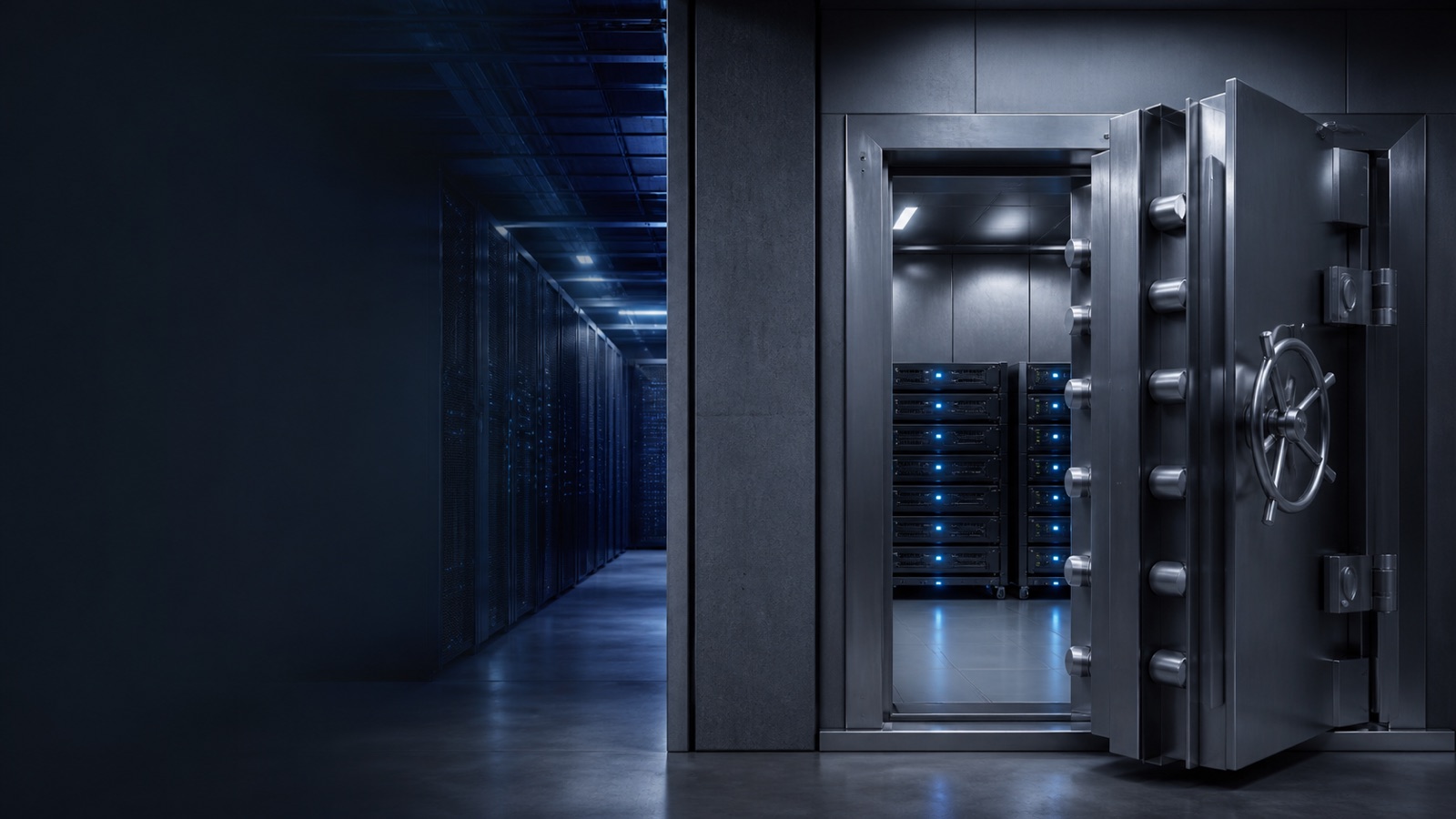
Ransomware operators stopped settling for encrypting your production data years ago. The modern playbook is to find your backups first, corrupt or delete them, and only then trigger the encryption — because a victim with no clean recovery point is a victim who pays. A backup that sits on the same network, reachable by the same credentials that just got compromised, is not a safety net. It is part of the blast radius. Dell PowerProtect Cyber Recovery is built to solve exactly this problem: a physically and logically isolated vault that holds immutable copies of your most critical data, with CyberSense analytics watching for the corruption signatures that signal an attack in progress.
This post walks through what the vault actually is, how it stays isolated, what CyberSense brings, and how public-sector and regulated buyers can stand one up compliantly.
Why an Operational Air Gap Beats a Conventional Backup
Traditional backup answers the question "can I restore?" Cyber recovery answers a harder one: "can I restore from data the attacker never touched?" The distinction matters because most disaster-recovery designs assume failures are accidental — a failed drive, a flooded data center, human error. Ransomware is adversarial. It actively hunts replication links, backup catalogs, and snapshot schedules.
The PowerProtect Cyber Recovery vault defends against that with a layered approach:
- Network isolation. The vault sits on a separate, locked-down environment with no routine connectivity to production. The replication link between production and vault is normally closed and opens only briefly to ingest data, then closes again — an operational air gap rather than a permanently connected pipe.
- Immutability and retention locking. Copies inside the vault are written to PowerProtect DD (Data Domain) storage with retention lock applied, so data cannot be altered or deleted before its policy expires — not by an administrator, not by compromised credentials, not by malware.
- Separate control plane. The vault is managed independently, so a domain compromise on the production side does not hand an attacker the keys to the recovery copies.
The result is a recovery source that survives even when production, the backup catalog, and the admin credentials have all fallen.
How the Vault Workflow Operates
The lifecycle is deliberately simple, because simplicity is what makes isolation auditable. A typical cycle runs in four stages:
- Sync. The air-gap link opens and replicates new data from production PowerProtect DD to the vault DD. This is the only window the link is open.
- Copy and lock. Inside the vault, a point-in-time copy is created and retention-locked, becoming an immutable recovery point.
- Analyze. CyberSense scans the copy for indicators of corruption or tampering.
- Recover. If production is compromised, clean copies are used to restore — either back to production or into an isolated clean room for forensic validation first.
Because the link is closed for the vast majority of the day, the attack surface is a fraction of what a continuously replicated target presents. The vault is essentially dark to the production network except during controlled ingest.
What CyberSense Analytics Adds
Isolation keeps a clean copy safe. CyberSense tells you which copy is clean — and that is the part most homegrown air-gap designs miss. CyberSense inspects data inside the vault using full-content analytics rather than metadata heuristics, examining files and databases for the statistical fingerprints of ransomware behavior: mass encryption, file-type spoofing, suspicious entropy changes, and corruption of databases and core files.
When CyberSense flags an anomaly, it does two things that shorten recovery dramatically:
- It identifies the last known-good copy, so responders are not guessing which restore point predates the infection.
- It supports post-attack diagnostics, pointing toward affected files and the likely vector so the clean-room rebuild is targeted rather than a full, slow rebuild from scratch.
For an organization measuring downtime in regulated-service-hours or mission impact, the difference between "we have backups somewhere" and "here is the verified clean copy from before the breach" is the difference between a controlled recovery and an open-ended outage.
Architecture and Platform Fit
A Cyber Recovery deployment is an integrated stack, not a single appliance. The protected data typically originates on Dell primary storage — PowerStore, PowerMax, or PowerScale — and is protected through PowerProtect Data Manager into PowerProtect DD systems on both the production and vault sides. The vault's management and CyberSense workloads run on PowerEdge servers (the R660 and R760 are common choices), managed out-of-band through iDRAC and monitored at fleet scale with OpenManage, keeping vault administration on its own isolated footing.
For regulated buyers, the platform choices carry compliance weight:
- Encryption modules that support FIPS 140-3 validation for data-at-rest and key-management requirements.
- Alignment with NIST 800-171 controls for protecting controlled unclassified information, where immutable, isolated recovery directly supports media-protection and recovery control families.
- TAA-compliant hardware for federal acquisition.
Sizing should be driven by your actual critical-data footprint and recovery-time objectives, not by a generic template — the point of the vault is the data that would end the mission if lost, not a second copy of everything.
Practical Takeaway
Treat the vault as a tier above your backups, not a replacement for them. Scope it to the systems your organization genuinely cannot operate without — identity, financials, clinical or case records, core operational databases — and let CyberSense give you a verified clean recovery point rather than hope. An air gap you can audit and a known-good copy you can prove are what separate a bad week from an existential one.
Uniqcli is an authorized Dell Technologies reseller, and we help federal, DoD, SLED, healthcare, and enterprise teams design and acquire PowerProtect Cyber Recovery vaults, quoted by RFQ. Request a quote or talk to a Dell data-protection specialist to scope a vault sized to your real recovery requirements.