Supply Chain Security with Dell: TAA Compliance, SCV, and Trusted Sourcing
For federal agencies, defense programs, and the contractors who serve them, hardware is no longer trusted simply because it boots. The supply chain itself is now an attack surface — and contracting officers, ISSOs, and infrastructure teams are expected to prove that what arrives in the rack is exactly what left the factory, sourced from compliant origins, and untampered in transit. Dell Technologies builds toward that expectation across three reinforcing layers: Trade Agreements Act (TAA) compliant sourcing, Secured Component Verification (SCV), and a controlled logistics chain. This post explains how those layers fit together and what to require when you procure.
Why Supply Chain Assurance Is a Procurement Requirement
Supply-chain risk management is no longer an optional best practice — it is written into the rules that govern federal acquisition. NIST SP 800-161 frames cyber supply-chain risk management (C-SCRM) for federal systems, NIST SP 800-171 governs protection of controlled unclassified information across the contractor base, and Section 889 restricts covered telecommunications and video equipment in federal procurements. The Federal Acquisition Supply Chain Security Act and CMMC reinforce the same theme: you must be able to attest to where your hardware comes from and that it has not been compromised before deployment.
The practical takeaway for buyers is that "buy the server" has become "buy the server, and document its provenance." A modern statement of work increasingly asks vendors to demonstrate:
- Country-of-origin compliance with trade agreements
- Component-level integrity verification at receiving
- A tamper-evident, auditable logistics path
- Firmware and platform integrity rooted in hardware
Dell's portfolio and reseller programs are built to answer all four.
TAA Compliance and Trusted Sourcing
The Trade Agreements Act requires that products sold to the U.S. government be manufactured or "substantially transformed" in the United States or a designated TAA-compliant country. For most federal acquisitions, TAA compliance is a gating requirement, not a nice-to-have.
Dell maintains TAA-compliant configurations across its enterprise and client lines, including PowerEdge R660 and R760 rack servers, PowerStore and PowerMax storage, PowerScale scale-out NAS, PowerProtect data protection appliances, and the Latitude, Precision, and OptiPlex client families. The key is that TAA status depends on the specific configuration and build location — so it must be confirmed per quote, not assumed by model name.
When you source through an authorized reseller, trusted sourcing also means provenance you can stand behind:
- Hardware purchased through Dell's authorized channel, never gray-market or unauthorized third parties
- Configurations validated as TAA-compliant before the order is placed
- Documentation (country of origin, compliance letters) available for your contract file
- Alignment with your acquisition's terms so the buy is clean from an audit standpoint
This matters because a technically correct server bought through a non-compliant channel can still fail a procurement review. Sourcing discipline is part of the security posture.
Secured Component Verification: Proving Integrity at Receiving
TAA tells you where hardware came from. Dell Secured Component Verification (SCV) tells you whether the hardware you received is the hardware Dell shipped. SCV is a supply-chain assurance capability that captures a certificate of the system's key components at the factory and lets you validate them at your dock.
On PowerEdge platforms, Dell generates a signed inventory certificate at manufacturing that records the system's measured component identity. After delivery, your team can verify that certificate against the actual system — confirming that components were not swapped, added, or altered between the factory and your data center. The verification leans on the platform root of trust and the iDRAC out-of-band controller, so the check is rooted in silicon rather than in the operating system that an attacker might already have touched.
In practice, SCV gives federal and DoD receiving teams a concrete, repeatable step:
- Generate or retrieve the factory component certificate for each system
- Validate it against the delivered hardware before the box ever joins production
- Record the result as evidence for C-SCRM and ATO documentation
- Flag any mismatch for investigation before deployment, not after
Paired with iDRAC and OpenManage, SCV becomes part of a broader integrity story: silicon-based root of trust, signed firmware updates, BIOS recovery, and system lockdown all work to ensure the platform stays in a known-good state through its lifecycle. For environments with cryptographic requirements, Dell also offers FIPS 140-validated components and configurations — confirm the specific module and validation level (such as FIPS 140-3) for your build.
Trusted Logistics From Factory to Rack
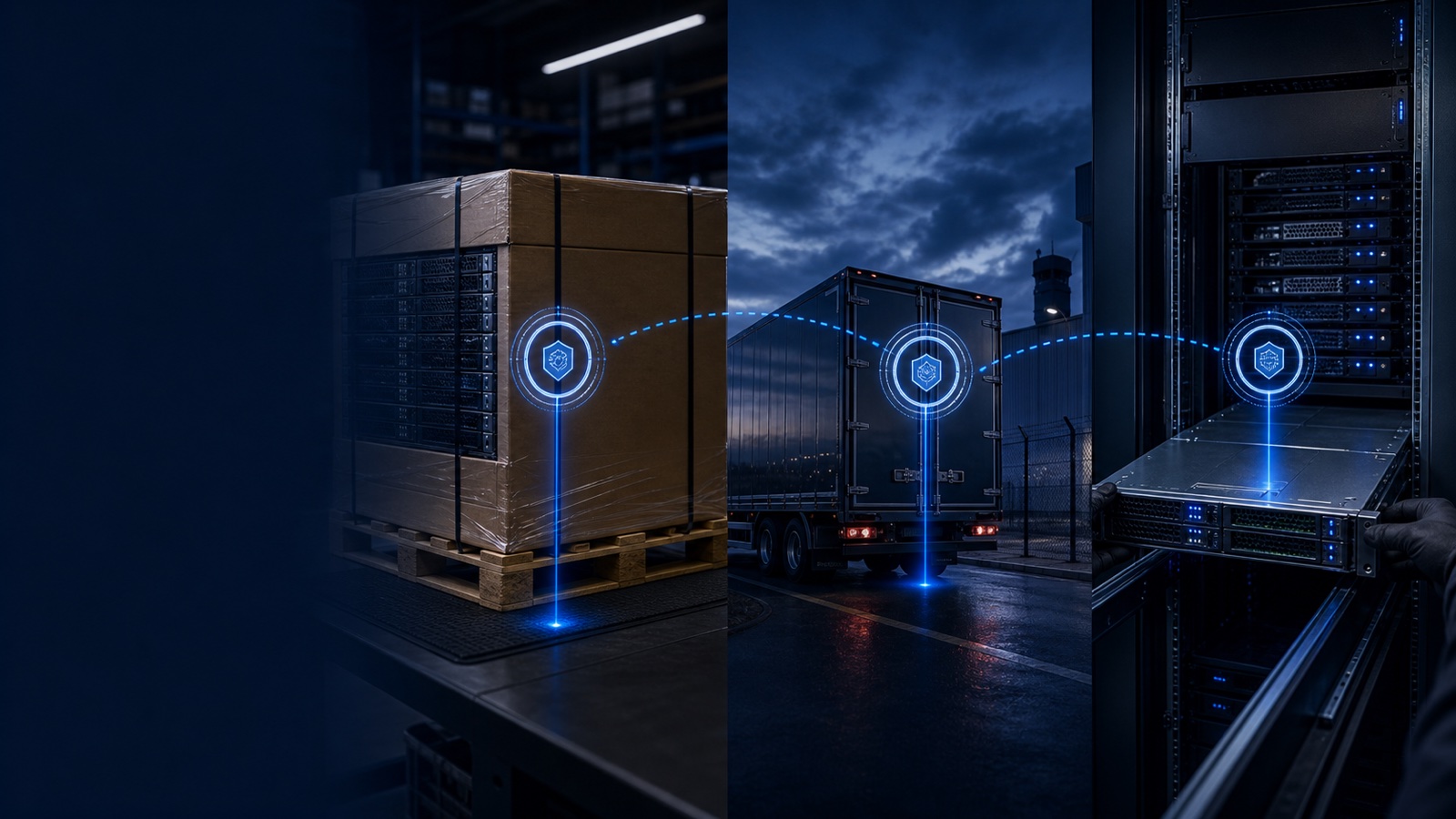
The window between manufacturing and installation is where tampering risk concentrates, so the logistics path deserves the same scrutiny as the hardware. Dell supports controlled delivery options designed to keep that chain tight: tamper-evident packaging, secured transport, and — for higher-assurance programs — chain-of-custody handling and staging.
Working through an authorized reseller, federal buyers can typically arrange:
- Asset tagging, BIOS configuration, and imaging before shipment, reducing the number of hands that touch a system in the field
- Coordinated, scheduled delivery to secured or CONUS facilities
- Documentation that ties each serial number to its order, certificate, and destination
- Integration of SCV verification into the receiving workflow so integrity is checked the moment hardware lands
The goal is a continuous, documented line from the factory floor to the moment a PowerEdge node powers on in your rack — with no unexplained gaps an auditor or adversary could exploit.
Practical Takeaway
Treat supply-chain security as three questions answered in order: Where did it come from (TAA and authorized sourcing)? Is it exactly what shipped (Secured Component Verification)? Was the path protected (trusted logistics)? Dell's platforms — PowerEdge, PowerStore, PowerMax, PowerScale, PowerProtect, and the Latitude, Precision, and OptiPlex client lines — are built to let you answer all three with evidence, not assurances. The differentiator is configuring and sourcing them correctly for your compliance obligations.
If you need TAA-compliant Dell configurations with SCV and trusted-delivery options, request a quote or talk to a Uniqcli specialist — we'll help you build a procurement package your contracting officer and your ISSO can both sign off on.