
Does NDAA Section 889 Apply to Dell Laptops and Servers?
Section 889 applies to a Dell laptop, desktop, or server the same way it applies to any other federal buy: the clauses ride on the order at any dollar value, and the seller has to represent whether it will provide covered telecommunications equipment. What it does not do is make PCs and servers a category question. It tests who produced the telecom or video surveillance equipment in the deal, not where the chassis was built.
Almost everything written about 889 is aimed at IP cameras and network switching, where the rule started. Here is the part that applies when you buy Latitude and Dell Pro laptops, OptiPlex desktops, Precision workstations, or PowerEdge racks.
Two rules, two different tests
Section 889 is an entity test. It bars covered companies' telecom and video surveillance equipment from federal systems regardless of where the finished product was built. A machine assembled in Mexico and one assembled in China face the identical 889 question.
TAA is a country-of-origin test. Under the Trade Agreements Act (19 U.S.C. 2501 et seq.), through FAR 52.225-5 and FAR 52.225-6, the end product has to be made or substantially transformed in the United States or a designated country. Assembly location is the whole point.
A configuration can satisfy 889 and fail TAA, or clear TAA and raise an 889 question on an accessory line. Two representations, two places in the file. See the federal TAA guide for the origin side.
What Part A and Part B actually prohibit
Part A bars an agency from procuring, extending, or renewing a contract for equipment, systems, or services that use covered telecommunications equipment as a substantial or essential component, or as critical technology, of any system. Part B bars contracting with an entity that itself uses covered equipment that way. Part B is about the seller's operations, not the item quoted: a vendor can ship a clean product and still be barred for what it runs internally.
Covered telecommunications equipment or services has four prongs, and only the first two are the name list everybody quotes.
- Telecommunications equipment produced by Huawei or ZTE, including subsidiaries and affiliates.
- Video surveillance and telecommunications equipment produced by Hytera, Hangzhou Hikvision Digital Technology, or Dahua Technology, including subsidiaries and affiliates, when used for public safety, security of government facilities, physical security surveillance of critical infrastructure, or other national security purposes.
- Telecommunications or video surveillance services provided by those entities, or provided using that equipment.
- Telecom or video surveillance equipment or services from any entity the Secretary of Defense, in consultation with the Director of National Intelligence or the Director of the FBI, reasonably believes is owned or controlled by, or otherwise connected to, the government of a covered foreign country.
The fourth prong is why 889 is not a five-name checklist you clear once. None of the four speaks to processors, drives, memory, or assembly location.
The representation is the deliverable, not a certificate
FAR 52.204-24, the solicitation provision, holds two separate representations that buyers routinely blur.
Paragraph (d)(1) is flat. The offeror represents that it will, or will not, provide covered telecommunications equipment or services in performance of the contract. No reasonable-inquiry qualifier attaches to it, and "will" is not a disqualifying answer at that stage: it triggers the disclosure at paragraph (e)(1), naming the equipment, the producer, and what the item does.
Paragraph (d)(2) carries the qualifier. After a reasonable inquiry, the offeror represents that it does, or does not, use covered equipment or services, or any system that uses them. The provision defines reasonable inquiry as one designed to uncover information already in the entity's possession about the producer's identity, and says expressly that it does not require an internal or third-party audit. One prong is about what you are being sold, the other about how the seller runs itself.
FAR 52.204-25 is the contract clause: the prohibition, the definition above, flowdown, and the duty to report covered equipment found during performance. FAR 52.204-26 is the SAM representation, covering both the provide side and the use side.
Who signs matters. On a reseller order the offeror is the reseller, not Dell. The OEM's program feeds what the reseller knows; the signature in the file is the reseller's.
Which clause does what, and who signs it
| Requirement | What it tests | Who signs, and where it lands |
|---|---|---|
| FAR 52.204-24 (d)(1) | Will covered equipment be provided | Offeror, flat representation, with the offer |
| FAR 52.204-24 (d)(2) | Does the offeror use covered equipment | Offeror, after reasonable inquiry, with the offer |
| FAR 52.204-25 | Prohibition, flowdown, reporting duty | Contractor, at award, in the order terms |
| FAR 52.204-26 | Provides or uses covered equipment | Offeror, in the SAM reps and certs |
| FAR 52.225-5 and 52.225-6 | Designated country or substantial transformation | Offeror, line by line, on the quote |
| Buy American Act | Domestic component and manufacture | Offeror, own clause set, not the TAA certificate |
Internal modules: what you can and cannot verify
Wireless modules, camera modules, and optics inside a Latitude or PowerEdge are configuration-specific. They change across build revisions, and no purchaser sees a component-level bill of materials.
That does not make the (d)(1) representation guesswork, nor an audit. It rests on what the offeror knows about who produced what it sells: the OEM's supplier controls and product documentation, plus the reseller's knowledge of the configuration it quoted. If a supplier change ever did put covered equipment into a delivered system, FAR 52.204-25 catches it, requiring a report to the contracting officer within one business day and detail within ten.
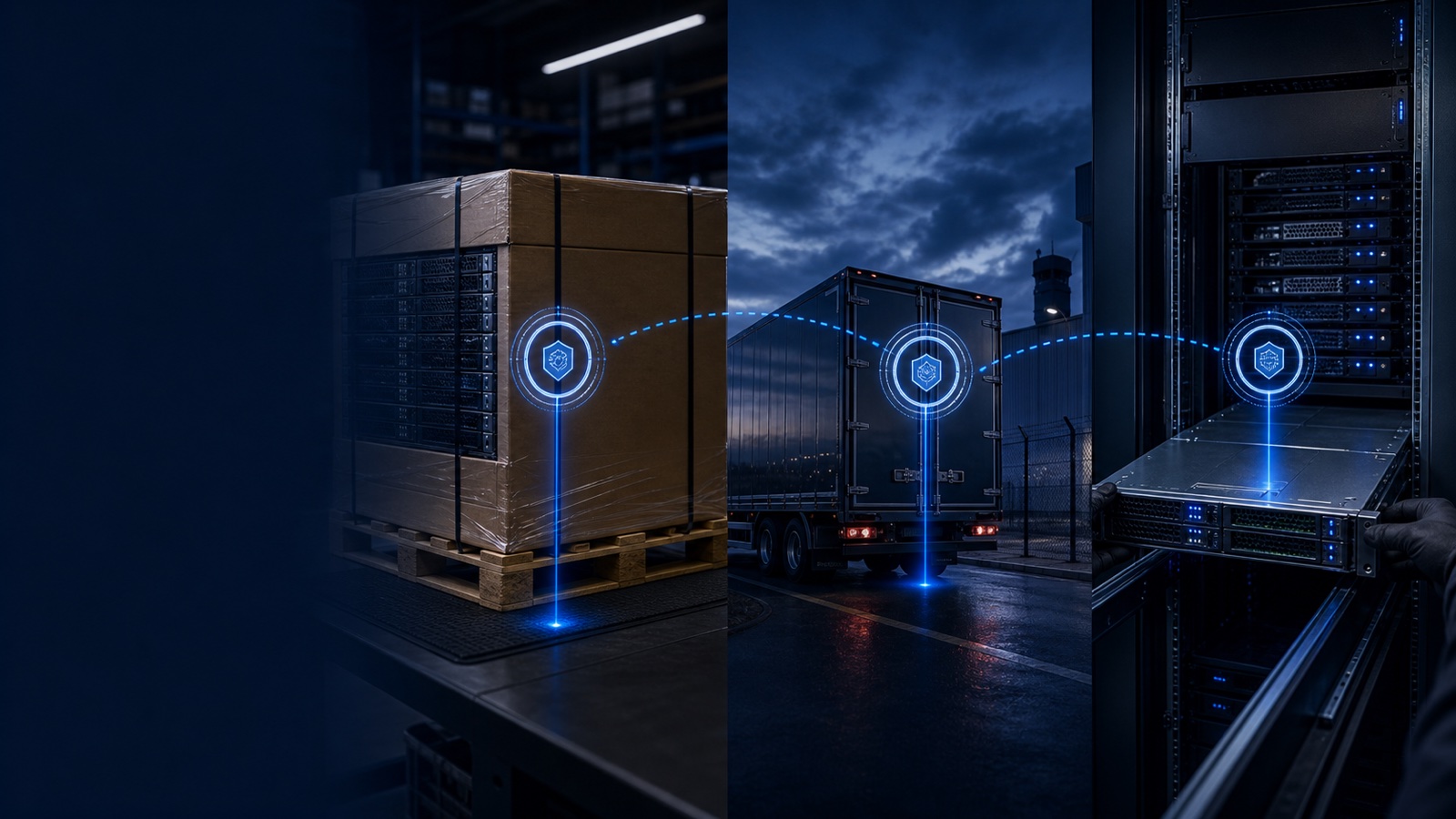
What you can verify at the dock is that the machine in the box left the factory that way. Dell's Secured Component Verification issues a signed inventory certificate against the as-shipped configuration, so a substitution in transit shows up as a mismatch. That is a tamper control, not an 889 certification, and worth ordering for that reason. See Secured Component Verification and supply chain security.
There is no dollar floor, and card buyers get caught by it
The prohibition reaches acquisitions at or below the simplified acquisition threshold and the micro-purchase threshold, and it reaches commercial products, including off-the-shelf items. Three laptops on a purchase card sit inside the same rule as a 400-node PowerEdge refresh.
Micro-purchases below the threshold are generally not TAA-covered, though agency policy varies and many agencies impose TAA anyway. Buyers who learn that relaxation assume 889 relaxes with it. It does not. See the GPC walkthrough.
Where 889 actually bites on a Dell order
Rarely the compute. The lines worth a second look sit around it:
- Cameras and video surveillance in a conference room or secure-facility build
- Wireless bridges, LTE or 5G modems, and cellular routers in field kits
- Switching, access points, and optics, where the entity question is genuinely live
- Anything from a marketplace seller who will not put a representation in writing
Uniqcli quotes Dell networking with the representation attached, which matters most on defense programs.
What the contract file should hold
- The FAR 52.204-24 representation signed for this offer, both prongs, not a vendor letter
- A SAM record carrying FAR 52.204-26, and the award document carrying FAR 52.204-25
- Line-level country of origin for TAA, filed separately from the 889 paperwork
- The Secured Component Verification certificate, if ordered, and the quote number
How Uniqcli validates TAA and configuration on the quote
Uniqcli is an independent reseller and systems integrator that sells and configures genuine Dell Technologies products, so on a direct order Uniqcli is the offeror and signs what goes in your file. That means:
- The FAR 52.204-24 representation is executed for the specific offer, provide prong and use prong answered separately.
- Country of origin is stated per line, not per order, because two builds of the same Latitude or PowerEdge model can come from different plants.
- Options that change origin, such as a drive, chassis, or factory-integration choice, are flagged before you commit.
- Secured Component Verification availability is noted per line.
Dell client and server families are commonly available in TAA-compliant configurations; confirm country of origin on the quote for the exact build. Pricing is configuration-specific, so confirm that on the quote too. See the TAA procurement guide for federal IT and TAA-compliant Dell versus gray-market Dell hardware.
Send your configuration and the clauses your solicitation carries, and request a TAA-validated quote at /quote. You get line-level origin, both 889 representations, and a document your contracting officer can file without a follow-up email.
Frequently asked questions
Does Section 889 apply to Dell laptops and servers?
Yes. Section 889 rides on every federal acquisition regardless of product category or dollar value, so a Latitude laptop, an OptiPlex desktop, and a PowerEdge server are all in scope of the question. What it does not do is single out PCs and servers as a risk category. The answer comes from the FAR 52.204-24 representation, not the product family.
What equipment does NDAA Section 889 actually cover?
Four categories. Telecom equipment produced by Huawei or ZTE. Video surveillance and telecom equipment from Hytera, Hangzhou Hikvision Digital Technology, or Dahua Technology when used for public safety, security of government facilities, physical security surveillance of critical infrastructure, or other national security purposes. Services from those entities or using their equipment. And anything from an entity the Secretary of Defense reasonably believes is owned or controlled by a covered foreign government.
Who makes the 889 representation, the reseller or the OEM?
The offeror makes it, which on a reseller order is the reseller. FAR 52.204-24 asks the entity submitting the offer to state under paragraph (d)(1) whether it will provide covered equipment, and separately, after a reasonable inquiry, whether it uses covered equipment under (d)(2). The OEM's program informs what the reseller knows, but an OEM policy page is not a representation.
Do Wi-Fi modules, webcams, or optics inside a Dell system trigger 889?
Only if a covered entity produced them, and that is not something a buyer can confirm from outside the supply chain. Practically, ask for the signed FAR 52.204-24 representation covering the exact configuration on your quote rather than a general corporate statement. If a solicitation demands module-level attestation, raise it with the contracting officer before you bid.
Is Section 889 the same as TAA?
No. Section 889 is an entity test barring covered telecom and video surveillance equipment regardless of assembly location. TAA, under 19 U.S.C. 2501 et seq. and FAR 52.225-5 and 52.225-6, asks whether the end product was made or substantially transformed in the United States or a designated country. A product can pass one and fail the other, and they file separately.
Does Section 889 apply to GPC micro-purchases?
Yes. The prohibition reaches acquisitions at or below the micro-purchase threshold and at or below the simplified acquisition threshold, and it covers commercial and off-the-shelf products. A three-laptop card buy carries the same obligation as a large competed order. TAA behaves differently: micro-purchases below the threshold are generally not TAA-covered, though agency policy varies and many agencies impose it.