
Dell PowerSwitch 6200 vs 6300: Access Switch Comparison
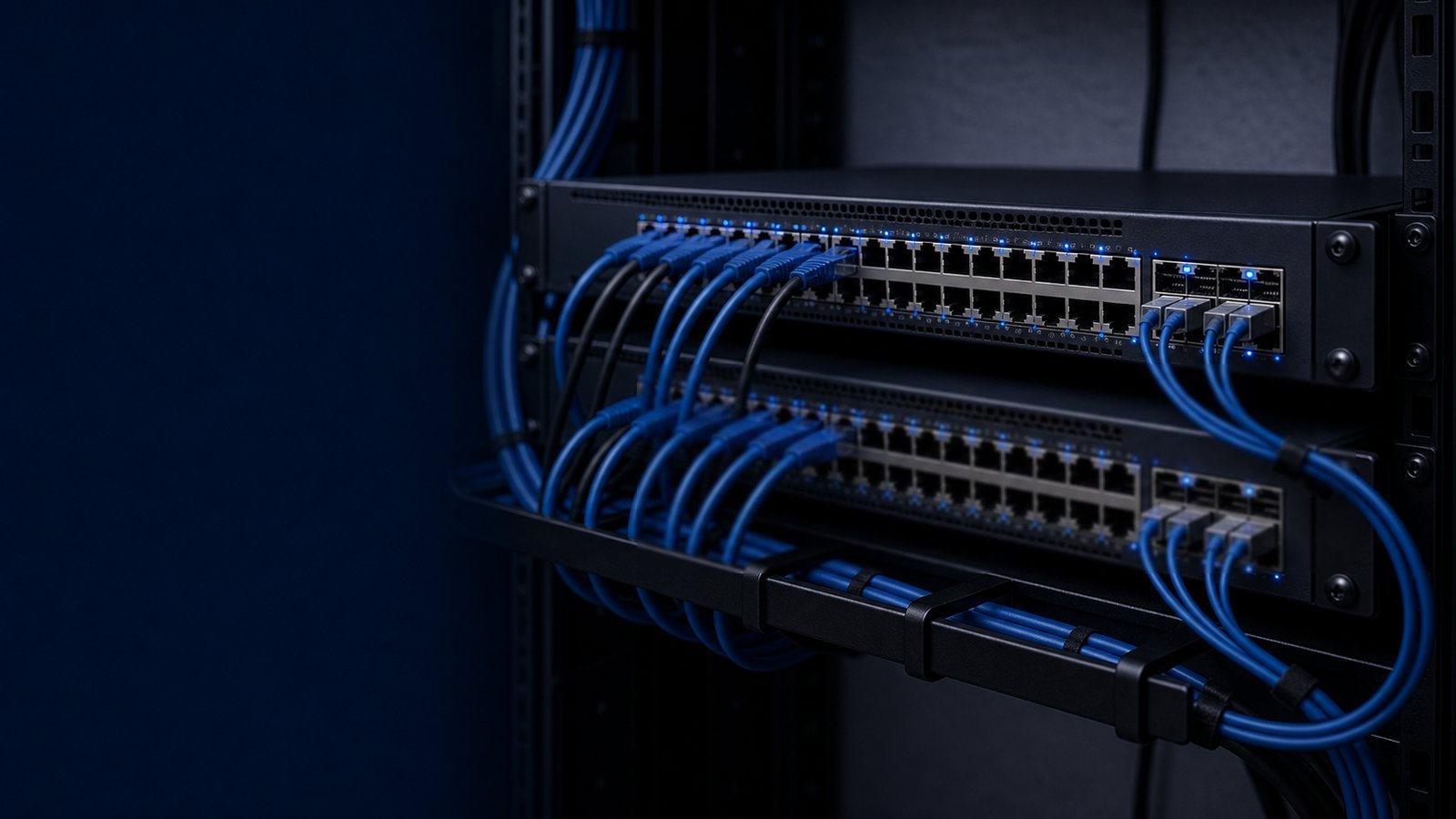
Dell Networking's CX switching portfolio has become the go-to platform for organizations modernizing campus, branch, and edge networks. Within that portfolio, two families dominate access-layer conversations: the CX 6200 and the CX 6300. Both run the same AOS-CX operating system and share the same Gen7 ASIC architecture, yet they are tuned for meaningfully different roles and buyer profiles.
This guide breaks down each series with enough technical depth to make a confident purchasing decision — whether you're refreshing a K-12 school district's wiring closets, upgrading a federal agency's campus edge, or scaling out a healthcare facility with hundreds of Wi-Fi 7 access points. For a broader look at available models, visit our Dell PowerSwitch switch catalog.
Understanding the CX 6200: Purpose-Built for Access-Layer Simplicity
The Dell Networking CX 6200 Switch Series is a next-generation family of stackable access switches optimized for campus edge, enterprise branch, and SMB deployments. It comes in two chassis styles:
- CX 6200F — fixed-port models (the most common access-layer choice)
- CX 6200M — modular variants with expansion slot flexibility
The 6200F is available in 24-port and 48-port 1GbE configurations with 4x SFP+ 10G uplinks, in both non-PoE and Class 4 PoE variants. The 6200M modular line extends PoE budgets up to 1,440W per switch, enabling dense Wi-Fi 7 AP and IoT deployments from a single unit.
Key design priorities for the 6200 series:
- Ease of deployment via the Dell Networking CX Mobile App for zero-touch provisioning, stacking, and initial configuration
- VSF stacking of up to 8 members for simplified, single-pane-of-glass management
- Layer 3 routing including OSPF (single area), static routing, IGMP/MLD snooping, and basic VRF
- Up to 176 Gbps non-blocking switching capacity and up to 202 Mpps forwarding per switch
- AOS-CX microservices OS with REST API, gRPC telemetry, and built-in Network Analytics Engine (NAE)
The 6200 is intentionally scoped: it handles the access edge cleanly without the complexity overhead of advanced routing protocols or multi-gigabit port densities. For buyers who need a reliable, manageable, cost-effective access switch and do not require BGP, VXLAN, or 2.5/5/10G downlinks, the 6200 is the right tool.
Understanding the CX 6300: Advanced Access Through Aggregation
The Dell Networking CX 6300 Switch Series spans a wider deployment range — from high-performance access to aggregation, campus core, and even data center top-of-rack (ToR). The series also ships in fixed (6300F) and modular (6300M) variants, but the feature set is substantially deeper:
- Dell Smart Rate multi-gigabit downlinks (1/2.5/5/10 GbE) for Wi-Fi 7 APs and power-hungry IoT devices
- Up to 90W 802.3bt PoE per port on select 6300M models — the highest per-port PoE budget in the 6000 access portfolio
- VSF stacking of up to 10 members or VSX (Virtual Switching Extension) active-active HA pairs with dual control planes and in-service software upgrades (ISSU), added in AOS-CX 10.16
- Full Layer 3 routing suite: BGP, EVPN, VXLAN, VRF lite, OSPF multi-area, PBR, PIM-SM, and PIM-DM
- MACsec-256 hardware-level line-rate encryption on CX 6300M models — critical for government and healthcare security mandates
- System switching capacity of 880 to 1,760 Gbps and up to 1,310 Mpps throughput
- Stacking bandwidth up to 400 Gbps
- SFP+ fiber models and LRM support for longer-reach campus distribution links
- PTP (IEEE 1588) and AVB for time-sensitive networking in AV-over-IP and industrial environments
The 6300 also includes three CX 6300L Layer 2-only access variants: purpose-built SmartRate multi-gig switches with MACsec-256 for security-focused high-speed access deployments that don't need Layer 3 routing.
Side-by-Side Specification Comparison
| Feature | CX 6200 Series | CX 6300 Series |
|---|---|---|
| Primary role | Campus access / branch | Access, aggregation, campus core, ToR |
| ASIC generation | Gen7 | Gen7 |
| Max downlink speed | 1 GbE | 1/2.5/5/10 GbE (SmartRate) |
| Max PoE budget (single unit) | 1,440W (6200M) | 2,880W (6300M) |
| Max PoE per port | 60W (802.3bt Class 6) | 90W (802.3bt) |
| VSF stacking members | Up to 8 | Up to 10 |
| VSX HA pairs | No | Yes (AOS-CX 10.16+) |
| OSPF | Single area | Multi-area |
| BGP / EVPN / VXLAN | No | Yes |
| VRF support | Basic | Full VRF Lite + multi-tenancy |
| MACsec-256 | No | Yes (select 6300M models) |
| PTP / AVB | No | Yes |
| PIM-SM / PIM-DM multicast | No | Yes |
| Switching capacity (per switch) | Up to 176 Gbps | 880–1,760 Gbps (system) |
| Management | AOS-CX, Dell SmartFabric Manager | AOS-CX, Dell SmartFabric Manager |
| Ideal network tier | Access edge | Access, distribution, aggregation |
Layer 3 Routing: Where the 6300 Pulls Ahead
The most significant technical divide between the two series is routing depth. For many access-layer deployments, OSPF single-area plus static routing (CX 6200) is entirely sufficient. VLANs stay flat, the distribution layer handles inter-VLAN routing, and life is simple.
However, modern campus network designs are increasingly pushing routing closer to the edge — a trend accelerated by zero-trust architectures, micro-segmentation, and SD-WAN fabric designs. The CX 6300's support for:
- BGP enables route peering directly from access switches in larger distributed campus designs
- EVPN/VXLAN allows VLAN extension across Layer 3 boundaries without legacy Spanning Tree dependencies
- VRF Lite creates tenant isolation at the wiring closet level — useful in healthcare (clinical vs. guest vs. IoT), higher education (student vs. faculty vs. research), and multi-tenant facilities
If your architecture calls for any of these features at the access or aggregation layer, the CX 6300 is the only choice in this price tier.
PoE and Power: Choosing the Right Budget for Wi-Fi 7 and IoT
Both series are designed to power Wi-Fi 7 access points, which can draw 25–30W per AP depending on the vendor's radio configuration. However, there are meaningful differences in how each series handles dense PoE environments.
CX 6200 PoE considerations:
- Fixed-port 6200F models cap at 370W (48-port PoE) or 740W (48-port Class 4 higher budget models)
- 6200M modular models push up to 1,440W — sufficient for 24–48 Wi-Fi 7 APs at standard draw
- Maximum 60W per port (IEEE 802.3bt Class 6) covers most APs and mid-range IP cameras
CX 6300 PoE considerations:
- 6300F models support up to 720W in fixed-port configurations
- 6300M modular variants scale to 2,880W across a single unit — the highest in the access 6000 family
- Select 6300M SKUs deliver 90W per port (IEEE 802.3bt), enabling devices like pan-tilt-zoom cameras, ruggedized thin clients, and emerging 90W AP designs
- Smart Rate downlinks (2.5/5/10G) let you allocate more bandwidth to APs without adding switch ports
For high-density healthcare environments with a mix of clinical-grade VoIP, wireless, and networked medical devices, the 6300M's 2,880W budget and 90W-per-port ceiling provide the most headroom. For standard enterprise branch or K-12 classroom density, the 6200M's 1,440W is typically more than adequate. Need help sizing PoE budgets for your project? Request a quote and our team will work through the math with you.
Security: MACsec, Zero Trust, and Compliance
Network-layer security is a mandatory evaluation dimension for federal, SLED, and healthcare buyers.
The CX 6300 carries a clear advantage here with MACsec-256 support on select 6300M and 6300L models. MACsec (IEEE 802.1AE) encrypts traffic at the Ethernet frame level — hop by hop — which is a requirement for many DoD and civilian agency deployments following NIST SP 800-53 controls and zero-trust guidance from CISA. It's also increasingly specified in healthcare RFPs concerned with PHI protection at the wiring closet level.
Both series support:
- 802.1X port-based authentication with RADIUS and dynamic VLAN assignment
- Role-Based Access Control (RBAC) via Dell SmartFabric Manager or Zero Trust Policy Manager
- Dynamic ARP inspection, DHCP snooping, and IP source guard for LAN security hardening
- Control plane policing and management plane access controls
- AOS-CX signed software images and secure boot
The CX 6200 does not support MACsec. For deployments where hardware-level link encryption is a compliance requirement — particularly federal sites with classified adjacencies or HIPAA-covered entities with strict PHI segmentation mandates — the 6300 is the appropriate choice. Browse our full selection of networking solutions including both series.
Management and Observability: AOS-CX Across Both Series
One consistent strength of the Dell PowerSwitch platform is that both the 6200 and 6300 run identical AOS-CX software, eliminating the skills gap that often occurs when teams manage multiple OS types across wiring closets and distribution.
Core management capabilities shared across both series:
- REST API and gRPC for intent-based automation and DevOps-style infrastructure-as-code
- Network Analytics Engine (NAE) — embedded time-series database (TSDB) for historical telemetry, anomaly detection, and scripted health checks
- Dell SmartFabric Manager integration — cloud-native AI-powered network management with AIOps, topology views, and policy orchestration
- AOS-CX Mobile App — smartphone-assisted provisioning for fast wiring-closet deployment without a laptop
- OpenConfig and YANG data model support for standards-based automation
The CX 6300 extends observability further with VSX HA visibility (active-active pair state) and richer telemetry correlated across larger stacks. For organizations with existing Dell SmartFabric Manager licensing or Dell APEX network management, upgrading from 6200 to 6300 is operationally seamless — same OS, same automation scripts, same management portal. Explore procurement options through our networking shop or review our infrastructure guides for deployment best practices.
Choosing Between the CX 6200 and CX 6300: Decision Framework
Use this framework to guide your decision:
Choose the CX 6200 when:
- You need a cost-effective, purpose-built access edge switch for campus, branch, or SMB
- Your routing requirements stop at OSPF single-area and static routes
- PoE demands are met within 1,440W per unit and 60W per port
- MACsec and advanced multicast routing are not required
- Deployment simplicity (mobile app provisioning, 8-member stacking) is a priority
Choose the CX 6300 when:
- Your network design calls for EVPN/VXLAN overlay, BGP peering, or multi-area OSPF at the access layer
- You need multi-gigabit (2.5/5/10G) downlinks for Wi-Fi 7 APs or demanding endpoints
- PoE requirements exceed 1,440W per unit or you need 90W per-port capability
- MACsec-256 is required for federal, DoD, or compliance-driven healthcare deployments
- You need VSX active-active HA with ISSU for zero-downtime maintenance windows
- The switch may serve dual access and aggregation roles as your network grows
Many organizations operate both series in the same campus: CX 6200 at pure-access wiring closets handling standard workstations and basic IoT, and CX 6300 at the distribution/aggregation layer or in specialized access zones (clinical suites, research labs, secure government floors) where advanced routing, MACsec, and high-density PoE are required. Contact our team to discuss a layered architecture that matches your specific topology.
How Uniqcli Helps
As an authorized Dell and Dell Networking partner, Uniqcli works directly with federal agencies, SLED institutions, healthcare systems, and enterprise IT teams to scope, configure, and procure CX switch infrastructure. We understand the procurement nuances — from TAA compliance requirements for federal buyers to HIPAA-driven segmentation needs in clinical networks — and we can translate those requirements into the right CX 6200 or 6300 SKUs.
Whether you're building a full campus refresh BOM, evaluating total cost of ownership between both series, or simply need a second opinion on port density and PoE budgeting, our team is ready to help.
Request a quote or reach out to our team to start the conversation. You can also browse our full Dell PowerSwitch switch catalog to see current model availability and configurations.