
Dell and Dell Switch End-of-Life: Refresh Planning
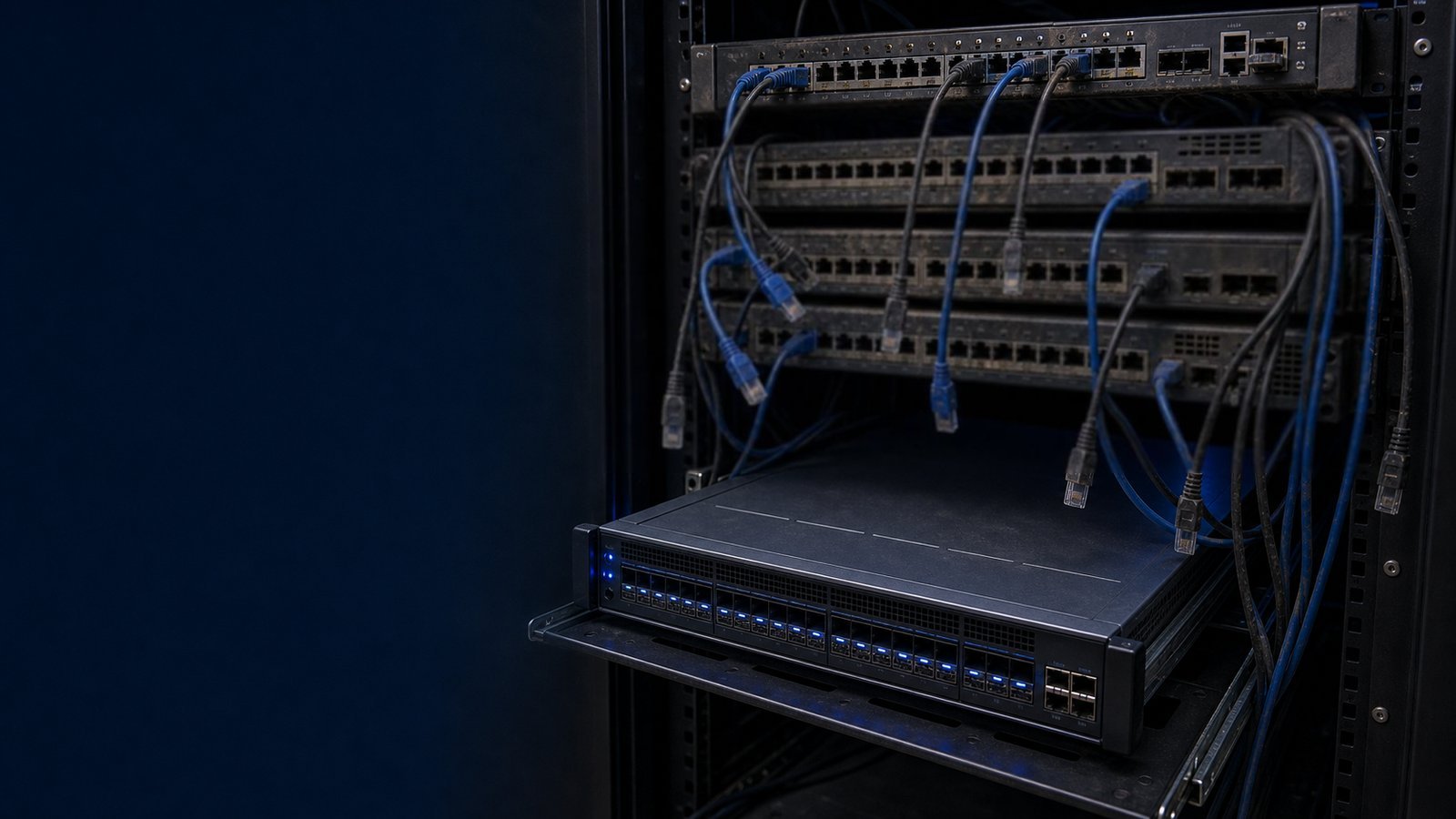
Network infrastructure ages whether you plan for it or not. For organizations running legacy Dell Networking switches — the 2530, 2540, 2920, 2930F, 2930M, 3810, or older ProVision-based models — the question is no longer whether to refresh, but when and how. With several of these platforms already past their end-of-sale (EOS) dates and others reaching end-of-service-life (EOSL) milestones, waiting carries real risk: unpatched CVEs, compliance exposure, vendor-unsupported hardware, and the operational fragility that comes from keeping aging infrastructure alive on sheer inertia.
This guide helps network administrators, IT directors, and procurement leads in federal, SLED, healthcare, and enterprise environments make sense of the Dell switch end-of-life landscape, build a defensible refresh timeline, and select the right Dell Networking CX replacement platforms for their workloads.
Understanding Dell Networking's End-of-Life Milestones
Dell Networking uses a structured lifecycle framework with distinct phases that buyers must understand before planning a refresh. Getting these definitions right is critical because the risks and costs are different at each stage.
- End of Sale (EOS): The product is no longer available for purchase from Dell. Existing units already in the field continue to receive support for some time, but new orders cannot be placed. This is the latest reasonable trigger for beginning a refresh plan.
- End of New Features (ENF): Software development for new capabilities stops. Security patches may still be issued, but the product is in maintenance-only mode.
- End of Maintenance (EOM): Active bug fixes stop. Only critical or high-severity CVE patches may still be released.
- End of Service Life (EOSL): All software and hardware support from Dell Networking terminates. No patches, no TAC support, no replacement parts through standard channels. Running hardware past EOSL creates direct compliance risk under frameworks such as NIST SP 800-53, HIPAA Security Rule, and CMMC 2.0.
Dell publishes lifecycle notices on the Dell Networking Support portal. Buyers should check product-specific notices rather than relying on third-party databases alone, as dates can vary by SKU.
Legacy Switch Series Most Affected Right Now
Several major Dell switch families are at or past critical lifecycle milestones. Below is a summary of the most widely deployed legacy platforms and where they stand.
Dell 2530 Series (DellOS-Switch, ProVision ASIC): The 2530 family reached end of sale and has been in EOSL for most SKUs. This is the most common access-layer switch still running in campus and branch environments, and it represents the largest single source of lifecycle risk for organizations that have not yet refreshed. No firmware updates are available for most 2530 models.
Dell 2920 Series (DellOS-Switch): Most 2920 models reached EOSL in 2023 or early 2024. These stackable access switches were popular for their PoE and 10G uplink options, but they are now fully out of support.
Dell 2930F / 2930M Series (DellOS-Switch): The 2930 family reached end of sale and is in the final support window for most SKUs. The 2930F was a workhorse aggregation and access switch across healthcare and education environments. Its replacement path leads directly to the Dell PowerSwitch 6200F and CX 6300 series.
Dell 2540 Series (DellOS-Switch): The 2540 served as a mid-tier access switch and is now approaching end of service. Organizations with 2540 deployments should be moving their refresh planning into an active execution phase.
Dell 3810 Series (DellOS-Switch, modular aggregation): Dell accepted final orders for the 3810 through January 2025. Organizations running 3810s as their aggregation or core layer — particularly in K-12 or mid-sized enterprise environments — are now in a post-EOS state and should be actively scoping replacements.
Older ProVision-Based Platforms (2600, 2610, 2810, 5400R legacy): These platforms ran on Dell's ProVision silicon and DellOS-Switch and reached EOSL years ago. Any organization still running these faces acute vulnerability risk and should treat a hardware refresh as an urgent capital project rather than a routine upgrade cycle.
The AOS-S to AOS-CX Platform Transition
One factor that makes this refresh cycle more significant than a simple hardware swap is the operating system transition. Legacy Dell switches ran DellOS-Switch (also called AOS-S), an operating system derived from the HP ProVision and Comware lineages. The replacement CX platform runs AOS-CX, which is architecturally different — a microservices-based, database-centric OS purpose-built for automation, programmability, and cloud management.
This means a 2530-to-CX-6100 refresh is not just a port-for-port hardware replacement. It involves:
- Relearning CLI syntax (AOS-CX uses a different command structure from AOS-S)
- Re-exporting or manually re-creating switch configurations
- Validating VLAN, QoS, spanning tree, and routing configurations against the AOS-CX equivalents
- Updating monitoring and management integration to use AOS-CX's REST API, gRPC telemetry, or Dell SmartFabric Manager
Dell Networking has published migration guides for several transitions (notably the 2930F-to-CX-6200F path), and Dell SmartFabric Manager provides a unified management plane for AOS-CX switches. For large environments, a phased migration starting with a pilot deployment — one access closet or one stack — is the least-disruptive approach.
Recommended Dell PowerSwitch Replacement Paths
The table below maps the most common legacy platforms to their current CX-series successors. These recommendations reflect Dell's published positioning and are appropriate for most enterprise, government, and healthcare deployments.
| Legacy Platform | Role | Recommended CX Replacement | Notes |
|---|---|---|---|
| Dell 2530 (8–48 port) | Edge access | CX 6000 / CX 6100 | CX 6000 for L2 access; CX 6100 for L3 routing at edge |
| Dell 2540 | Mid-tier access | CX 6100 / CX 6200F | CX 6200F adds VSF stacking and richer PoE options |
| Dell 2920 | Stackable access | CX 6200F | Direct form-factor and feature parity; AOS-CX migration required |
| Dell 2930F / 2930M | Access / aggregation | CX 6200F / CX 6300 | CX 6300 for multi-gig uplink and higher-density deployments |
| Dell 3810 | Modular aggregation / core | CX 8325 / CX 6400 | CX 8325 for fixed-form campus core; CX 6400 for modular chassis |
| Dell 5400R (legacy) | Chassis aggregation | CX 6400 / CX 8360 | CX 6400 offers chassis modularity; CX 8360 for high-capacity core |
Browse the full Dell PowerSwitch switch portfolio on Uniqcli to compare models, check availability, and request a quote for your specific environment.
Compliance and Security Risks of Running EOL Switches
For buyers in regulated sectors, end-of-life switching hardware is not just an operational inconvenience — it is a compliance liability. Here is what EOSL hardware exposure means across common regulatory frameworks:
NIST SP 800-53 / FedRAMP: SI-2 (Flaw Remediation) requires organizations to identify, report, and remediate information system flaws in a timely manner. Running hardware that no longer receives CVE patches directly conflicts with this control. Federal agencies and contractors operating under FISMA cannot satisfy SI-2 with EOSL switches in the path.
CMMC 2.0 (Level 2 and above): Configuration management and system and communications protection domains require that systems remain patched and supportable. CMMC assessors are increasingly scrutinizing hardware lifecycle status during assessments.
HIPAA Security Rule (45 CFR § 164.312): Covered entities must implement technical safeguards to protect ePHI in transit. Network hardware running without security patches creates a technical safeguard gap that OCR auditors can and do cite.
CISA Known Exploited Vulnerabilities (KEV) Catalog: Multiple DellOS-Switch CVEs have appeared in the CISA KEV catalog, including vulnerabilities in the 2530 and 2930 platforms. When hardware is past EOSL, these CVEs cannot be patched — organizations are left with network-level compensating controls as their only option.
Beyond compliance, unpatched switches are a lateral movement vector. In healthcare and government environments where network segmentation is a primary defense strategy, a compromised access switch undermines the entire zero-trust architecture above it.
Building a Refresh Timeline That Actually Works
EOL switch refreshes fail most often not from budget issues but from inadequate planning timelines and unrealistic scope. Here is a framework that works for federal, SLED, and healthcare environments.
Phase 1 — Asset inventory and lifecycle audit (Weeks 1–4): Generate a complete inventory of switch models, firmware versions, and current lifecycle status. Cross-reference against Dell's official EOL notices. Identify which switches are already past EOSL and which have 12–24 months remaining. This inventory becomes the foundation for your capital planning request.
Phase 2 — Architecture review and replacement design (Weeks 4–10): A one-for-one hardware swap rarely reflects today's requirements. Use the refresh as an opportunity to right-size the access layer (consolidating closets where possible), add multi-gig PoE for Wi-Fi 6E/7 AP support, and validate uplink capacity for current and projected bandwidth needs. Work with your Dell partner to produce a bill of materials and topology diagram.
Phase 3 — Pilot deployment (Weeks 10–16): Deploy CX replacement switches in one building or one access closet. Validate AOS-CX configuration, Dell SmartFabric Manager integration, monitoring, and change control procedures. Document lessons learned before scaling.
Phase 4 — Phased rollout (Months 4–12): Execute building-by-building or closet-by-closet. Maintain change windows aligned with your organization's change management policy. For government and healthcare environments, schedule around maintenance windows and critical operational periods.
Phase 5 — Decommission and disposal (Ongoing): Properly decommission EOSL hardware. Dell offers asset recovery and trade-in programs. For federal and SLED buyers, NIST SP 800-88 media sanitization requirements apply to any storage on managed switches, and proper documentation is required for asset disposition.
Procurement Considerations for Government and Healthcare Buyers
Federal, SLED, and healthcare organizations face procurement constraints that commercial buyers do not. Several factors shape how to execute a switch refresh in these environments.
Acquisition alignment: Dell Networking switches are available to federal, DoD, and SLED buyers, quoted by RFQ. Verify which contracts your institution is authorized to use before issuing a purchase order.
Budget cycle timing: SLED organizations tied to July–September fiscal years should begin refresh planning and scoping no later than February–March to allow time for solicitation, award, and delivery before fiscal year close. Lead times on networking hardware have extended in recent years; a 6–12 week delivery lead time should be assumed for large orders.
Dell APEX as a CapEx alternative: Dell APEX offers a consumption-based financing model that can shift switch infrastructure from a capital expenditure to an operating expense. For organizations with constrained CapEx budgets, this can unlock refresh projects that would otherwise be deferred. APEX for Networking includes Dell PowerSwitch switches and can be paired with Dell SmartFabric Manager for unified cloud management.
Trade-in and upgrade programs: Dell Networking runs trade-in promotions that provide credit toward new CX hardware when retiring legacy AOS-S switches. These promotions change regularly, and an authorized partner can verify current program terms and eligibility at the time of purchase.
You can request a quote or browse Dell PowerSwitch switches directly on the Uniqcli platform to see current pricing and availability.
What to Prioritize If Budget Forces a Phased Approach
Not every organization can refresh all legacy switching infrastructure in a single budget cycle. When sequencing is required, prioritize in this order:
- Switches already past EOSL with no remaining support path. These pose the highest compliance and security risk.
- Core and aggregation switches (3810, 5400R legacy). A failure or compromise at the aggregation layer has a wider blast radius than an access-layer failure.
- Access switches serving high-sensitivity environments: clinical networks, OT/ICS segments, PII data paths, and classified enclaves.
- High-density PoE access switches supporting Wi-Fi 6E APs or IP cameras. Legacy PoE budgets often cannot support modern AP power requirements (802.3bt, 90W Class 8), creating performance constraints even before the security concern is addressed.
- All remaining access-layer switches, prioritized by age, firmware status, and network segment sensitivity.
For each phase, document the risk-acceptance rationale for equipment not yet replaced. This documentation protects IT leadership and satisfies audit requirements for organizations operating under NIST RMF or similar frameworks.
How Uniqcli Helps
Uniqcli is an authorized Dell and Dell Networking partner with deep experience supporting federal agencies, state and local government, K-12 and higher education institutions, and healthcare organizations through complex refresh projects. We understand the procurement, compliance, and operational constraints unique to these sectors.
Our team can help you:
- Audit your current switch inventory against Dell Networking's lifecycle database
- Design an Dell PowerSwitch replacement architecture matched to your current and future traffic patterns
- Identify the compliant acquisition path for your organization
- Source hardware with verified lead time estimates
- Connect you with Dell trade-in and financing programs, including APEX for Networking
Contact our team to discuss your refresh timeline, or request a customized quote for Dell PowerSwitch switches today. You can also explore the full Dell PowerSwitch switch catalog to compare models and check current availability. If you are earlier in the planning process, our networking guides cover architecture topics that can inform your refresh design before you go to procurement.
There is no safe way to leave EOSL networking hardware in place indefinitely. The right time to plan was a year ago. The second-best time is now.