
Dell PowerEdge vs Supermicro: Tier-1 Support vs Build-to-Order Flexibility
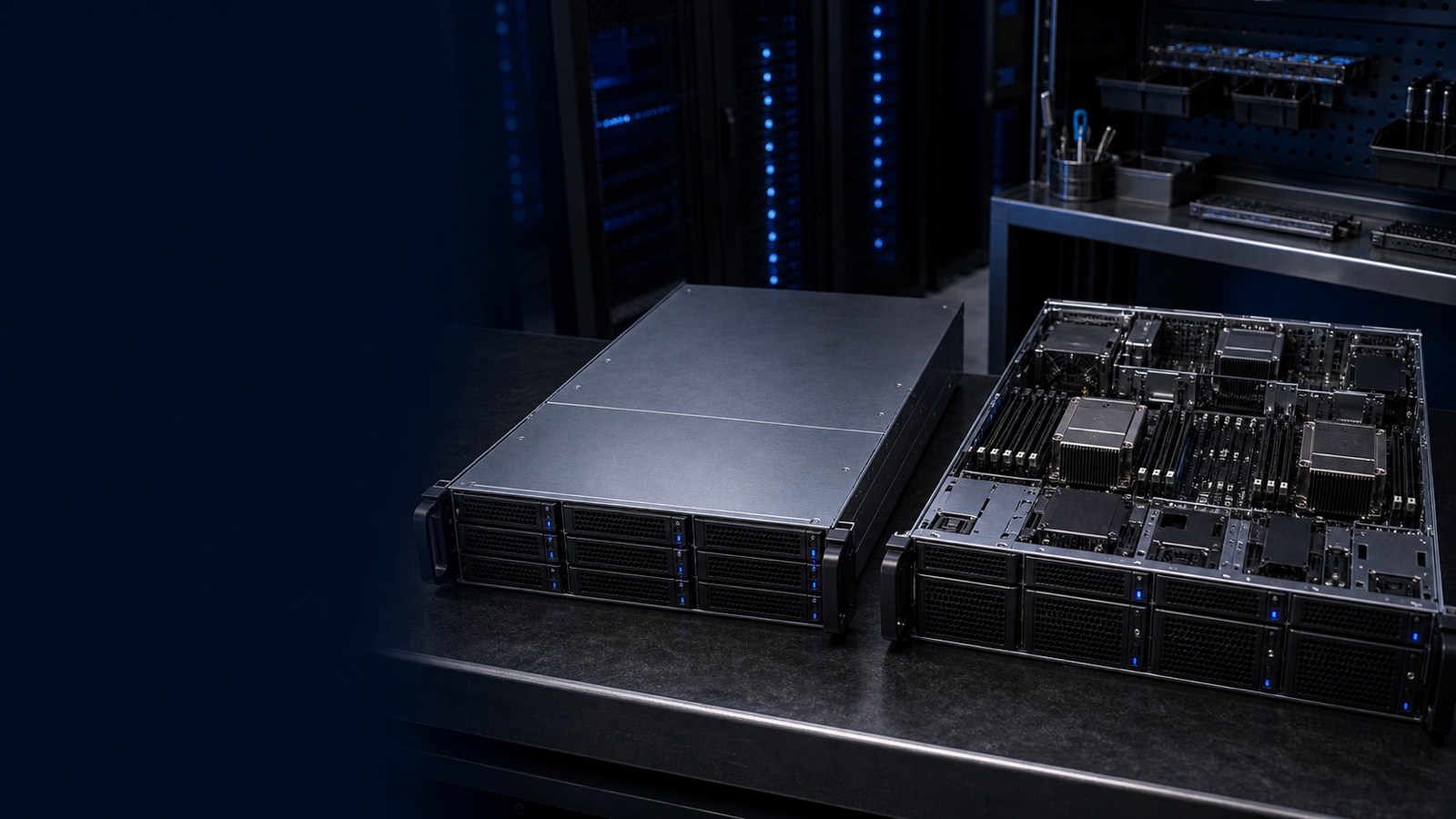
Dell PowerEdge and Supermicro both build x86 rack servers on the same Intel Xeon and AMD EPYC silicon, and on a raw spec sheet they can look nearly identical. The real decision is rarely about which CPU or how many DIMM slots. It's about the operating model you're buying into for the next five to seven years: how the server is configured, how it's managed at scale, how its supply chain is secured, and who answers the phone when a node goes down at 2 a.m. This is a vendor-honest look at where Supermicro genuinely wins and where Dell's lifecycle, security, and support earn the premium — written for the people who actually have to live with the fleet.
Where Supermicro Wins: Configurability and Price
Supermicro's core strength is build-to-order flexibility. Its catalog is enormous and its design philosophy is modular, so you can specify unusual combinations of GPUs, storage topologies, networking, and chassis form factors that a tier-1 vendor may not offer as a standard SKU. For teams with a precise, well-understood workload — a specific accelerator density, a particular drive count, a niche thermal or power envelope — that à la carte approach is a real advantage.
The other obvious win is acquisition cost. Supermicro typically carries less management overhead and lighter branding premium, so on a pure dollars-per-core or dollars-per-terabyte basis it often comes in cheaper at the point of purchase. That matters most when:
- You have deep in-house hardware expertise and your own validation, imaging, and break-fix processes.
- You're building hyperscale-style or research clusters where you self-support and treat nodes as disposable.
- You need an exotic configuration that doesn't map to a mainstream product line.
- Up-front capital cost is the dominant constraint and you're prepared to own the operational tail.
If that profile describes your environment, Supermicro is a legitimate, capable choice. The caution is that the sticker price is only one line of a multi-year total cost of ownership, and the lines below it are where Dell PowerEdge tends to close the gap.
Where Dell Wins: Lifecycle Management at Scale
The difference most operators feel daily is management. Every current PowerEdge server — the 1U R660, the 2U R760, and the rest of the line — ships with iDRAC (integrated Dell Remote Access Controller) and Lifecycle Controller, plus fleet-level orchestration through OpenManage. This is a mature, consistent management plane: out-of-band control, automated BIOS and firmware updates, hardware inventory, telemetry, and policy-driven configuration that behaves the same across the entire portfolio.
That consistency compounds as the fleet grows. With OpenManage you template a configuration once and apply it across hundreds of nodes; firmware baselines are curated and tested by Dell as a unit rather than assembled component-by-component. Supermicro offers capable BMC and IPMI tooling, and large operators automate it effectively — but it generally demands more integration work, more in-house scripting, and more of your own validation to reach the same turnkey, audited state. You can get there; you're just doing more of the engineering yourself.
For shops running mixed PowerEdge fleets, the practical payoff is operational uniformity: the same management model whether a node is a dense compute host or a storage-heavy box, and the same skills transferable across the rack.
Supply-Chain Security and Compliance
For federal, DoD, SLED, and healthcare buyers, this is often the deciding category. Dell engineers PowerEdge with a hardware root of trust, cryptographically verified (signed) firmware, and a Secured Component Verification process that lets you confirm a server arrived as built — security woven through the design and the supply chain rather than added afterward. Dell maintains a coordinated vulnerability-disclosure program and ships ongoing signed firmware remediation through the same Lifecycle Controller pipeline you already use, which keeps patching auditable instead of ad hoc.
That posture maps directly onto the frameworks public-sector and regulated buyers must satisfy:
- TAA compliance for products acquired on federal orders.
- FIPS 140-3 validated cryptographic modules where required.
- NIST 800-171 controls for protecting controlled unclassified information.
- Procurement on a compliant, pre-competed path.
Supermicro participates in federal channels and offers TAA-compliant configurations as well, so this isn't a one-sided story. But Dell's scale, documentation depth, and standardized provenance tooling generally make the compliance and audit burden lighter to carry — which is worth real money when a contracting officer or a security assessor needs evidence, not assurances.
Support: Tier-1 Coverage vs Self-Reliance
When hardware fails, the support model is what you actually bought. Dell ProSupport and ProSupport Plus provide global coverage, next-business-day or faster on-site options, proactive issue detection through SupportAssist, and a single accountable vendor for the whole platform — firmware, drivers, and hardware under one number. For organizations without a deep hardware bench, or with SLAs that don't tolerate improvisation, that backstop is the premium's clearest justification.
Supermicro's support is solid but more channel- and integrator-dependent, and coverage depth varies by region and partner. That's fine if you self-support and stock spares; it's a risk if you expected the vendor to own resolution end to end. The honest framing: Supermicro shifts more operational responsibility onto you in exchange for a lower price, while Dell absorbs more of that responsibility for a higher one.
The Practical Takeaway
Choose Supermicro when you have strong in-house hardware expertise, need an unusual build-to-order configuration, and acquisition cost outweighs lifecycle overhead. Choose Dell PowerEdge when fleet-wide manageability through iDRAC and OpenManage, signed-firmware supply-chain security, compliance evidence, and accountable tier-1 support drive your total cost of ownership — which is most enterprise, federal, and healthcare environments. The price delta usually narrows or reverses once you count the operational years, not just the purchase order.
If you're weighing PowerEdge against a white-box build, talk to a Uniqcli specialist. As an authorized Dell Technologies reseller, we'll model the real lifecycle cost, configure TAA-compliant PowerEdge platforms, quoted by RFQ, and help you decide where the premium pays for itself.