
Are Dell PowerSwitch Switches TAA Compliant for DoD Networks?
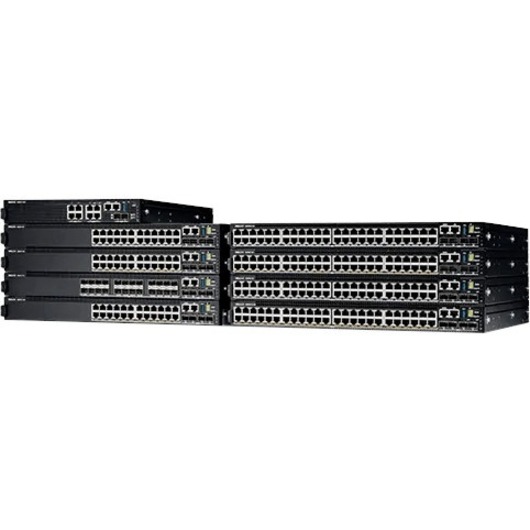
Yes, with the usual federal caveat: Dell PowerSwitch access and data center switches are commonly available in TAA-compliant configurations, and DoD and civilian network teams buy them that way routinely. What is never automatic is the documentation: TAA eligibility attaches to a specific configuration and its country of origin, not to the PowerSwitch name on the bezel. Switching also carries a wrinkle that servers and laptops do not: on a switch order, the line that breaks compliance is usually not the switch. It is the optics.
Three gates, and TAA is only one of them
A switch carrying DoD traffic clears three separate reviews. They get collapsed into one "is it approved" conversation, and that is where schedules slip: each gate has a different owner and different evidence.
| Gate | What it certifies | Who owns it | When it is checked |
|---|---|---|---|
| TAA (FAR 52.225-5 / 52.225-6) | Country of origin: made or substantially transformed in the US or a designated country | Contracting officer, with the reseller supplying origin per line item | Before award, on the quote and the line-level bill of materials |
| Section 889, NDAA | The gear is not covered telecom or video surveillance equipment from the named companies | Contracting officer, against the offeror's written representation | At representation and again at order, clause level |
| STIG conformance under RMF | Security configuration of the running device: hardened settings, authentication, crypto mode, logging | System owner, ISSO, and the Authorizing Official | After hardware selection, during ATO and continuous monitoring |
TAA is a trade statute (19 U.S.C. 2501 et seq.) enforced through FAR 52.225-5 and 52.225-6, and it asks one question: where was this end product made or substantially transformed. Section 889 is a supply chain prohibition tied to named companies rather than to a country, so a switch built in a designated country can still be in scope. STIG conformance is about how you configure and run the box, and a perfectly TAA-eligible switch with default credentials fails it on day one. Keep the Buy American Act separate: different rule, different test, so read the solicitation's clause list.
Optics and cables are separate end products
This is the part that costs people an award. A leaf switch can be finished in a designated country while the 25G optics you plug into it were manufactured somewhere that is not on the designated list. Each of these is its own end product with its own origin determination:
- Optical transceivers (SFP28, QSFP28, QSFP-DD, and the rest)
- Direct attach copper cables and active optical cables
- Breakout cables for 100G to 4x25G or 400G to 4x100G fan-out
- Spare power supplies, fan modules, and rail kits ordered as separate lines
Third-party and "compatible" optics deserve extra scrutiny. Coded transceivers are frequently manufactured in one country and programmed for a vendor's switch in another, and programming a module to answer a vendor ID is generally not substantial transformation. If a sheet says "TAA compliant" over an entire optics block without naming a country per part, that is a marketing line, not evidence.
Three habits keep optics from sinking the order. Require country of origin on every cable and transceiver line. Design around availability: if a designated-country optic is not offered in the reach you specified, shorten the run to copper or change the port speed rather than filing a late waiver. Order optics on the same contract action as the switches. Settle the fabric design first; our PowerSwitch top-of-rack selection guide matches downlink speed to server NICs and sizes uplinks.
Section 889 applies to switches, and it is a different question
Section 889 of the NDAA prohibits agencies from procuring covered telecom and video surveillance equipment from specific named entities, and, in its second part, from contracting with entities that use such equipment as a substantial or essential component. Country of origin answers neither part.
Get the supplier's written 889 representation on the quote itself, covering the switch and the components inside it, then look at adjacent gear on the same link, because exposure often arrives through a companion device rather than the switch you are buying. TAA-eligible and 889-clean are two separate findings. Our Dell TAA compliance guide covers how both get documented on a Dell order.
The approval gate changed, so stop shopping for a listing
The DoDIN Approved Products List program sunset on September 30, 2025, and a STIG-first compliance model replaced it. For switching, that means no product listing to hunt for, and no reseller, this one included, should tell you a specific switch sits on an approved list. Evidence replaces the listing: the STIG for your network operating system and version, the hardened configuration you run, and the crypto mode.
Crypto runs on its own clock. FIPS 140-2 certificates move to NIST's Historical List on September 21, 2026, so new procurements should cite FIPS 140-3 validation for the cryptographic module and the software version that puts the device in validated mode. We unpack both in FIPS 140 and DoDIN APL for federal buyers and how Dell gear reaches a DoD network.
Does the network operating system change TAA status?
Not for the hardware line. PowerSwitch "-ON" models are open networking platforms: they ship with SmartFabric OS10 and can run a third-party network operating system such as Enterprise SONiC. Country of origin is set by where the hardware is manufactured or substantially transformed, and loading a different NOS does not move that determination.
The NOS choice matters everywhere else on the file. If the operating system is priced as its own end item, it carries its own compliance answer and its own line. And because STIG conformance and FIPS validation are version-specific, a NOS swap restarts the security review even though the hardware never moved. Decide the software stack before you build the compliance package.
Documenting country of origin on a multi-switch order
A realistic fabric order is a leaf pair per rack, a spine pair, transceivers on both ends of every link, breakout cables, and spares: a hundred lines where the switches are ten. Require this on the quote before award:
- Country of origin stated on every line, hardware and accessories alike
- The manufacturer part number for each item, so origin ties to a SKU, not a description
- A written Section 889 representation covering the whole order
- Which lines are sold under a GSA Schedule contract, since Schedule buys are TAA-covered by clause, and which are open market
Two timing traps. Origin can change between quote and delivery if a build shifts production sites, so re-confirm on long lead items and partial shipments. And micro-purchases below the threshold are generally not TAA-covered, though agency policy varies; a switching order usually clears it anyway. Pricing is configuration-specific, so confirm it on your quote. Our TAA procurement guide for federal IT has the fuller checklist.
How Uniqcli validates TAA and configuration on the quote
Uniqcli is an independent reseller and systems integrator that sells and configures genuine Dell Technologies products, and we build the compliance record as part of the quote rather than after the purchase order lands.
We configure the fabric first, settling leaf, spine, uplinks, and port speeds against your server and storage footprint, using the logic in our S-series versus N-series comparison for campus access versus data center roles; for a bake-off, PowerSwitch against Cisco Nexus compares licensing model, uplink density, and port-speed economics. We validate origin per line across switches, transceivers, cables, and spares, stating the country on the quote rather than in a footer. We return the Section 889 representation in writing with that quote. And we flag the gates that stay yours, including the STIG for your NOS version and the FIPS 140-3 status of the cryptographic module.
Browse configurable options under networking, see how we support mission networks on our defense page, and when you need numbers for the contract file, request a TAA-validated quote with origin documented line by line.
Frequently asked questions
Are Dell PowerSwitch switches TAA compliant?
PowerSwitch models are commonly available in TAA-compliant configurations, but compliance is determined per configuration and per country of origin, not by product family. The same model can ship eligible or ineligible depending on where that particular build is manufactured or substantially transformed. Treat any blanket "PowerSwitch is TAA compliant" claim as unverified. The defensible answer is the country of origin printed on your quote next to the manufacturer part number you are buying.
Do optics and transceivers on a switch order need their own TAA check?
Yes. Transceivers, direct attach cables, active optical cables, and breakout cables are separate end products with their own country-of-origin determinations, and they are the lines most often quoted without a stated country of origin. Third-party coded optics carry the highest risk: a module is frequently manufactured in one country and programmed for a vendor's switch in another, and programming is generally not substantial transformation. Require origin per line on every optic and cable.
Does Section 889 apply to Dell switches?
Section 889 applies to any procurement of covered telecom equipment, switching included, and it is a separate test from TAA. It prohibits buying covered equipment from specific named entities and, in its second part, contracting with entities that use such equipment as a substantial or essential component. A switch built in a designated country can still raise an 889 question if covered components sit inside it or in the gear attached to it. Get the representation in writing alongside the origin data.
Is TAA compliance the same as DoDIN APL or STIG approval?
No. TAA is a trade rule about where an end product was made, and it says nothing about security. The DoDIN APL program sunset on September 30, 2025 and has been replaced by a STIG-first compliance model, so your Authorizing Official now wants evidence of hardened configuration against the STIG for your network operating system and version, plus current FIPS validation for the cryptographic module. A TAA-eligible switch can still fail the security review.
Does the network operating system choice change a switch's TAA status?
No. Country of origin for the hardware is set by where the switch is manufactured or substantially transformed, so running SmartFabric OS10 or a third-party NOS such as Enterprise SONiC on an open networking model does not change the TAA answer for that line. If the operating system is priced as a separate end item on the contract, it gets its own compliance treatment and its own line. The NOS choice does reset your security work, because STIG conformance and FIPS validation are version-specific.
How do I document country of origin for a multi-switch order?
Ask for a line-level bill of materials stating country of origin against every manufacturer part number: switches, transceivers, cables, power supplies, and spares, not a summary note. Keep that quote in the contract file with the supplier's Section 889 representation and any manufacturer origin documentation. Re-verify on long lead items and partial shipments, because production sites can move between quote and delivery. Note which lines are GSA Schedule, since Schedule buys are TAA-covered by clause.