
Is Dell PowerStore TAA Compliant? Federal Storage BOM
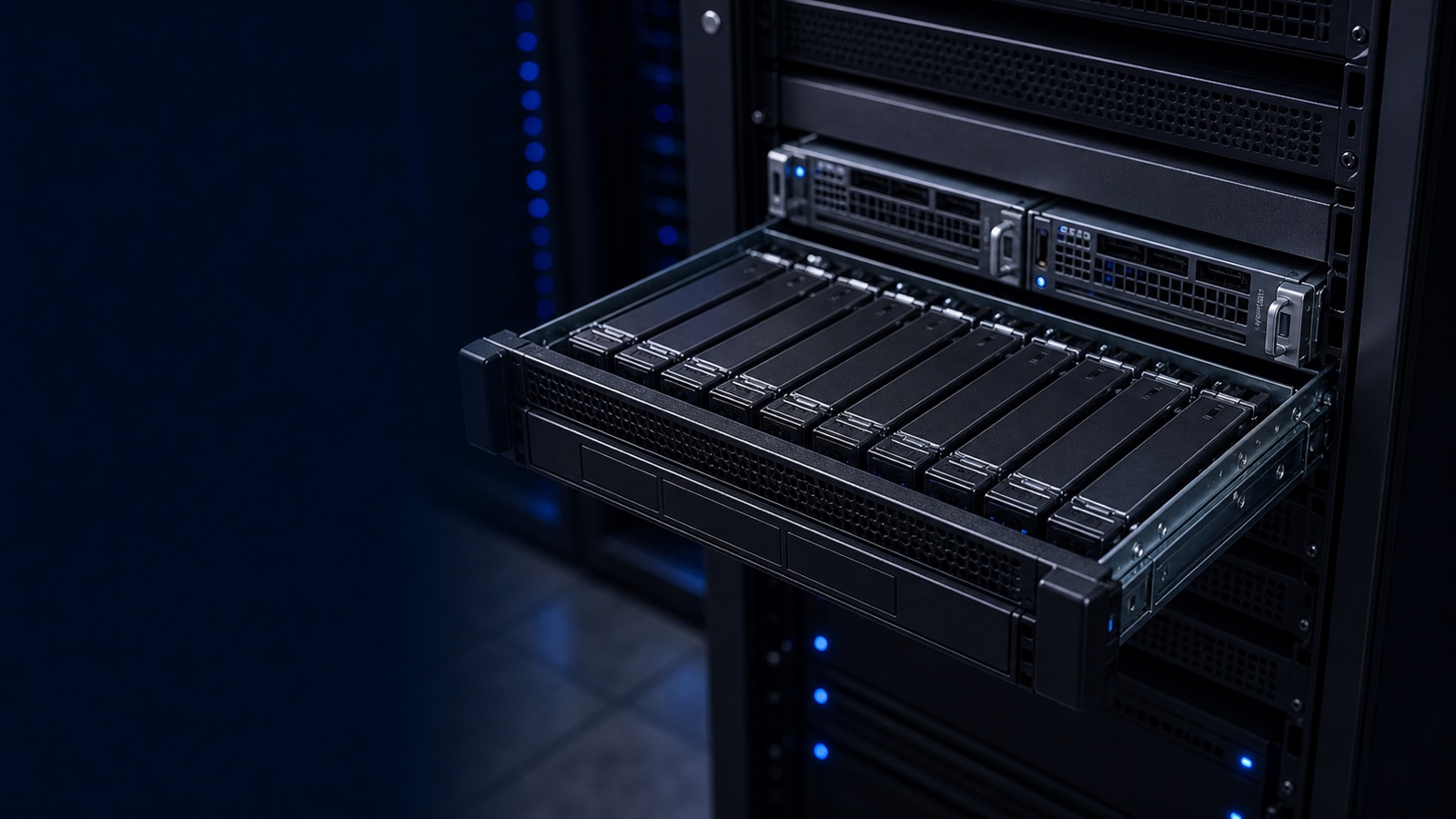
Yes, a federal agency can buy a Dell PowerStore array in a TAA-compliant configuration: PowerStore is commonly available in TAA-compliant builds. Compliance is not a property of the model, though. TAA attaches to the end product on each line of the quote, and a storage array is never one line: base enclosure, expansion shelves, drive packs, optics, rack hardware, plus software and support lines whose treatment the contracting officer decides. Each hardware line carries its own country of origin.
Why a storage BOM breaks the usual shortcut
For a laptop, TAA is nearly a single question: one box, one origin line. An array is a kit. The head unit ships from one manufacturing path, the shelves from another, the drives from a third, and an enclosure and a drive pack on the same quote can come back with different origins. That is why each line gets asked separately.
So "is PowerStore TAA compliant" is the wrong shape of question for a contracting officer. The answer that survives an audit is a line-level record: this part number, this origin, this dated quote, certified by the offeror.
What the rule actually asks
The Trade Agreements Act (19 U.S.C. 2501 et seq.) reaches procurement through FAR 52.225-5, which lists the designated countries, and FAR 52.225-6, the certificate the offeror completes. The test is where the end product was manufactured, or, when components come from several places, where it was substantially transformed into an article with a new name, character, or use. Substantial transformation drives the answer, not where an individual chip was fabricated.
Three other rules get folded into TAA in conversation. Keep them separate on paper.
| Rule | What it asks | Where it shows up on the solicitation |
|---|---|---|
| Trade Agreements Act | Manufactured or substantially transformed in the US or a designated country? | FAR 52.225-5, plus the FAR 52.225-6 certificate |
| Buy American Act | Domestic content under its own test and thresholds, which are not the TAA test? | Its own representation, separate from TAA |
| NDAA Section 889 | Covered telecommunications or video surveillance equipment from the named entities? | Its own representation on the same solicitation |
| FIPS validation | Cryptographic module validated under the NIST program? | A security requirement in the RFQ or SOW, not a procurement representation |
On coverage: products offered under a GSA Multiple Award Schedule contract are TAA-covered, so the Schedule contract carries the clause, though you still confirm origin per part number on the quote in front of you. Buys below the micro-purchase threshold are generally not covered, though agency policy varies, and an array is almost never a micro-purchase. More mechanics in the TAA procurement guide for federal IT.
Run the check line by line
Take the quote, not the datasheet, and put every row through the same four questions: what is this line, where was it manufactured, who certifies that answer, and what goes in the contract file. Same discipline as any TAA-compliant BOM, at a higher row count.
| BOM line | Origin question | Who confirms | File entry |
|---|---|---|---|
| Base enclosure and controller nodes | Origin of the appliance as shipped | Reseller of record | Origin letter with part and quote number |
| Expansion enclosures (NVMe, SAS) | Own origin per shelf part number | Reseller of record | One row per shelf SKU |
| Drive packs (SSD, SED) | Origin of the drive assembly, by type | Reseller of record | One row per drive part number |
| Array software and subscription rows | Part of the hardware end product, or separate? | Contracting officer | Written CO determination |
| Optics, transceivers, cables | Own origin lines, frequently different from the array | Reseller of record | Easy rows to miss |
| Rack, rails, PDU | Own origin lines when on the award | Reseller of record | Row on the worksheet |
| Support and services SKUs | In scope of the certificate or not? | Contracting officer | CO determination |
| Later shelf or capacity add-on | Asked again at the new order | Reseller of record | New origin letter, new quote number |
That last row catches people: an origin answer is good as of the quote that carries it, and a shelf added two years later is a new purchase on a new date.
Shelves and drive packs are their own end products
An expansion enclosure is not an accessory to the head unit for TAA purposes. It has its own part number, bill of materials, and place of final assembly, so it gets its own origin line in the certificate backup. Same for drive packs: three drive types means three origin rows.
Capacity-heavy builds carry the most exposure, simply because there are more drive rows. When a drive part does not come back with a designated-country origin, the fix is a substitution to an equivalent part that does, decided before award. That is a sizing conversation as much as a compliance one: see the PowerStore sizing walkthrough.
Software and licensing: ask, do not assume
How a solicitation treats software, subscription, and licensing lines is a determination for the contracting officer, because the clauses reach end products delivered under the contract. It turns on how the requirement is written and whether the software is embedded in the delivered hardware or sold as a separate entitlement.
Never tell anyone software is exempt. Put those rows on the same origin worksheet as the hardware, flag which ship embedded on the controllers versus which are standalone entitlements, and ask the CO for a written determination. One paragraph of email in the file beats an assumption.
PowerVault ME5 and the rest of the Dell storage line
The method does not change by family. PowerVault ME5, PowerStore, PowerScale, and PowerMax all get origin per line, on the quote, at the time of the quote, with shelves and drives as separate end products. What changes is worksheet length: an ME5 build has fewer rows. Capability is a separate decision, covered in PowerVault ME5 versus PowerStore and the Dell storage selection guide. Inside the family, PowerStore 1200T versus 3200T covers the head-unit tradeoff.
FIPS drives are a separate requirement
Self-encrypting drives sit in the last row of the table above, outside the Trade Agreements Act entirely. A build can be fully TAA-compliant with drives carrying no FIPS validation, and the reverse is possible too. Whether you need them comes from the data being stored and your controls. If encryption at rest is in your control set, put the requirement on the RFQ explicitly so it is quoted from the start, because changing drive type after award is expensive. More in the write-up on Dell self-encrypting drives.
Documenting an array with dozens of rows
Do not narrate compliance in prose. Build one worksheet with one row per part number: description, quantity, country of origin, designated country yes or no, source of the answer, and date. Attach the signed FAR 52.225-6 certificate, the reseller's origin letter referencing the quote number, and any CO determination on software or services rows.
Two habits keep the file clean. Tie the origin letter to a quote number and a date, never to a model family, so nobody later reads it as a standing claim. And re-run the worksheet on every change order or shelf add.
Getting a TAA-validated PowerStore quote
Uniqcli is an independent reseller and systems integrator that sells and configures genuine Dell Technologies products, and TAA validation happens at the line level before the quote goes out. Every row on a PowerStore or PowerVault configuration (base enclosure, shelves, drive packs, optics, rack hardware, software, support) is checked for country of origin against the designated country list. When a part does not come back clean, we propose a substitution before award.
You get a signed origin letter tied to the quote number, a line-level worksheet for the contract file, and a flag on any row that needs a contracting officer determination rather than a vendor answer. Pricing is configuration-specific, so confirm it on your quote. Browse Dell storage, see how federal buys are handled at government, and request a TAA-validated configuration at /quote.
Frequently asked questions
Is Dell PowerStore TAA compliant?
PowerStore is commonly available in TAA-compliant configurations, but compliance belongs to the specific build, not the model name. The Trade Agreements Act test applies to each end product delivered, so the answer comes from the origin recorded against every part number on your quote, on the date it was issued. Ask for a line-level origin statement naming that quote number and file it with the signed FAR 52.225-6 certificate.
Do expansion enclosures and drive packs need a separate country-of-origin check?
Yes. An enclosure and a drive pack are each their own end product with their own part number and place of final manufacture, so each gets an origin line rather than inheriting the base enclosure's answer. Quote three drive types and you need three origin rows. A capacity expansion two years after award is a new purchase on a new quote, reconfirmed then rather than carried forward.
Is PowerStore software or licensing subject to TAA?
It depends, and the contracting officer makes the call. Because the certificate reaches end products delivered under the contract, a subscription or license row is not automatically inside it or outside it; treatment follows how the requirement was written and whether the code ships on the controllers or stands alone. Get that determination in writing before award, keep the rows on your worksheet meanwhile, and never let a software line be called exempt on a vendor's say-so.
Is PowerVault ME5 handled the same way as PowerStore for TAA?
Yes, the method is identical across the Dell storage families. ME5, PowerStore, PowerScale, and PowerMax each need origin confirmed per line on the quote, with enclosures and drive packs counted as separate end products. Worksheet length changes with build size; the questions asked of each row do not. All four are commonly available in TAA-compliant configurations, but availability is confirmed line by line on the quote you are issued, not by family.
Do I need FIPS-validated self-encrypting drives on a federal PowerStore?
That depends on your security controls, not on TAA. The Trade Agreements Act asks where a product was manufactured; FIPS validation asks whether the drive's cryptographic module was validated under the NIST program. They are independent tests. If encryption at rest is required by your system security plan, put the self-encrypting drive requirement on the RFQ so it is quoted from the start, because changing drive type after award is costly.
How do I document TAA for a storage array with dozens of line items?
One spreadsheet, one row per part number, is the whole method. Each row carries description, quantity, country of origin, a yes or no on designated country status, who supplied that answer, and when. Behind it, file the signed FAR 52.225-6 certificate, the origin letter from the reseller of record naming the quote number, and any contracting officer determination on software or services rows. Re-run and re-file it on every change order.