
Is the Dell PowerEdge R760 TAA Compliant? Federal Guide
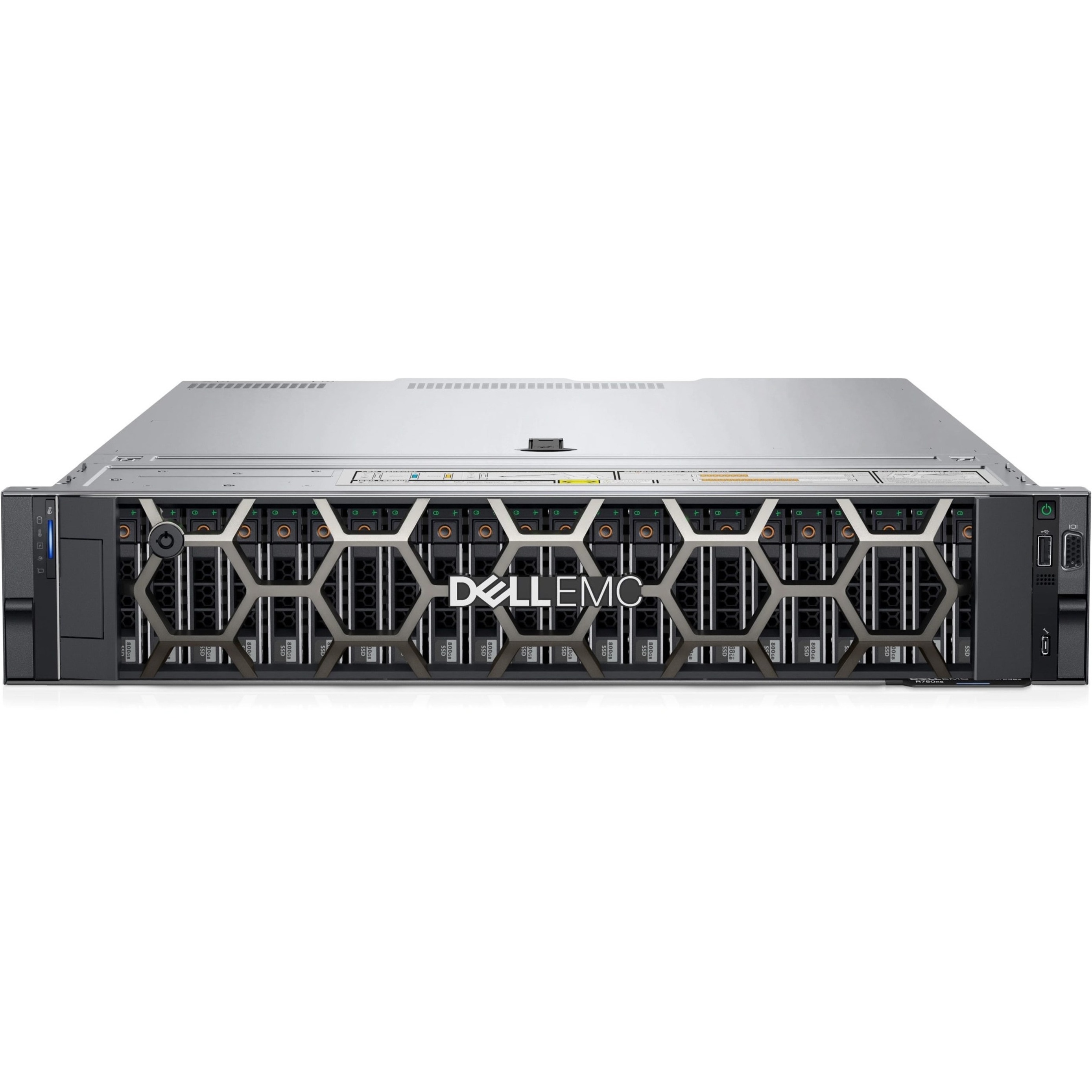
Yes, a federal data center can buy the Dell PowerEdge R760 in a TAA-compliant configuration, and the place to settle that is the quote, line by line, before the purchase order goes out. The R760 is commonly available in TAA-compliant builds, but compliance belongs to a specific configured system with a confirmed country of origin, never to the model number on its own.
An R760 order is a stack of separate decisions: processors, memory, accelerators, network adapters, drives, risers, and power supplies. Each choice can change the configured part number, and each configured part number gets its own country-of-origin confirmation. Our federal guide to Dell TAA compliance covers the rule at the family level; this post walks it through one server.
What the Trade Agreements Act tests on a server
The Trade Agreements Act (19 U.S.C. 2501 et seq.), carried into contracts by the clause at FAR 52.225-5, asks one question of an end product: was it wholly manufactured in, or substantially transformed in, the United States or a designated country? For a rack server, that transformation is generally the final assembly, integration, and test that produces a working configured system. Where that work happens sets the country of origin.
The origin of a single component (a processor, a DIMM, an SSD) does not by itself decide the answer for the system, and the same model can be assembled in more than one place depending on configuration and routing. Our explainer on country of origin for Dell hardware covers the designated-country list and the transformation test.
The Buy American Act is a different rule with a different test and does not substitute for a TAA determination. NDAA Section 889 is a separate covered-telecom representation, collected alongside the origin lines.
Where the R760 sits in the PowerEdge line
The PowerEdge R760 is Dell's mainstream 2U, two-socket rack server on Intel Xeon Scalable processors, part of the 16th-generation PowerEdge family. It is the volume platform for virtualization, database, and general-purpose compute. The R660 is its 1U sibling, the R760xa is the accelerator-dense variant, and the R7625 is the AMD EPYC counterpart. For a federal shortlist across those options, see the best Dell servers for a federal data center.
The levers that can change the answer
Any option that changes the configured part number, or that ships as its own line item, can move the origin answer. Origin comes off the build record and is reconfirmed whenever a choice changes.
| Lever | What can change | Who confirms | What the contracting officer files |
|---|---|---|---|
| Base system (chassis, processors, memory) | Configured part number and build routing | Reseller, against the build record | Origin line for the configured system |
| GPUs and other accelerators | Factory-integrated, or shipped as its own line | Reseller, per line | Origin line per accelerator, or proof it is inside the build |
| Network adapters (OCP and PCIe) | Same split: factory-integrated or shipped separately | Reseller, per line | Origin line per adapter, plus the Section 889 representation |
| Drives, boot device, RAID controller | Capacity, media type, self-encrypting option, and controller each make a distinct build | Reseller, per line | Origin line per storage line; FIPS module named separately if required |
| Risers, power supplies, rails, bezel | Riser layout and PSU wattage change the part number; rails and bezels ship as accessory lines | Reseller, per line | Origin line on every product line, accessories included |
| Changes after the quote | Anything above changing after the quote | Reseller reissues the quote | The reissued quote, replacing the original |
Accelerators
GPUs are where R760 quotes most often get complicated. An accelerator integrated at the factory sits inside the transformation that sets the system's origin; the same accelerator shipped as its own line item carries its own country of origin. A blanket "TAA compliant" stamp on the quote header, with no origin on the accelerator line, is not an answer.
Network adapters
The R760 takes an OCP 3.0 mezzanine adapter plus PCIe adapters in the risers. Adapters are the lines where the Section 889 covered-telecom representation matters most. Treat every adapter line like an accelerator line: origin confirmed, 889 representation on file.
Drives, boot device, and controller
NVMe, SAS, and SATA choices, capacity, the self-encrypting drive option, the boot device, and the RAID controller are separate decisions that produce separate configured builds. If your agency requires FIPS-validated encryption at rest, the drive is where that requirement lands, so settle the drive before you request the quote.
Settle origin at the quote, before the purchase order
The sequence is short. Fix the configuration first, accessories included. Request a quote that prints country of origin on every line, and read the rail and bezel lines with the same attention as the processor line. If anything changes, ask for a reissued quote, file the reissue, and cut the purchase order against it. Doing this at the quote costs a day. Discovering at the loading dock that one adapter line has no origin record costs a return, a re-quote, and a delayed deployment.
Our walkthrough on building a TAA-compliant bill of materials applies the same discipline to a multi-server order, and the TAA procurement guide for federal IT covers why GSA Schedule buys are TAA-covered, with the Trade Agreements certification generally handled at the contract level, and why micro-purchases below the threshold are generally not covered, subject to agency policy.
What Secured Component Verification proves, and what it does not
Secured Component Verification is Dell's supply-chain assurance option for PowerEdge. Dell captures a signed inventory of the components installed in your specific server at the factory, and you verify through iDRAC at delivery that the box matches that manifest. Our explainer on Secured Component Verification for Dell hardware covers how to run the check.
It does not answer the TAA question. SCV attests to what is inside the chassis, and says nothing about where the substantial transformation happened or whether that place is a designated country. A server can pass SCV verification and still be non-compliant, and a compliant server can ship with SCV never ordered.
FIPS is a separate question
FIPS 140 validation applies to a cryptographic module (a self-encrypting drive, for example) rather than to the server as an end product, and it has nothing to do with country of origin. A TAA-compliant R760 needs FIPS-validated drives only if your agency's data-at-rest policy calls for them, and those drives do not make a server TAA compliant by themselves. Specify the FIPS module and the origin line as two separate requirements on the same quote. Our guide to FIPS 140-3 on Dell hardware covers where validated modules show up in a PowerEdge build.
The R660 follows the same rules
The R660 is the 1U two-socket sibling on the same platform generation, and the same line-by-line confirmation applies. Density, expansion slots, and drive bays decide which one you buy; the TAA treatment is identical. Our R660 versus R760 comparison covers workload fit, the spec-by-spec R760 versus R660 comparison lays the platforms side by side, and TAA versus non-TAA Dell hardware shows what differs on the quote.
How Uniqcli validates the R760 on the quote
Uniqcli is an independent reseller and systems integrator that sells and configures genuine Dell Technologies products for federal and defense buyers. When you request a TAA-compliant PowerEdge R760, we build the configuration you specify, confirm country of origin for that configured part number against the build record, and print it on every product line, accelerators, adapters, drives, and accessories included. If the configuration changes, we reissue the quote with the origin lines reconfirmed. We supply the Section 889 representation, name the FIPS-validated module you specified, and add Secured Component Verification on request. Pricing is configuration-specific; confirm it on your quote.
Browse current Dell servers to scope the build, then request a TAA-validated quote with your configuration locked, accessories included. The quote you get back is the document your contracting officer files.
Frequently asked questions
Is the Dell PowerEdge R760 TAA compliant?
The PowerEdge R760 is commonly available in TAA-compliant configurations, but compliance is a property of a specific configured system rather than of the model. The Trade Agreements Act tests where the finished product was substantially transformed, and that can vary by build. The only reliable answer is a country-of-origin line for the exact configured part number on your quote, so treat a blanket yes in a quote header as incomplete.
Do GPUs, NICs, or drives added to an R760 change its country of origin?
They can change the configured build, so each one is reconfirmed rather than assumed. An accelerator, adapter, or drive integrated at the factory becomes part of the system that gets transformed, and the new configured part number gets its own origin confirmation. The same item shipped as a separate line carries its own country of origin. Ask for origin on every line, and ask again whenever the configuration moves.
How do I get country-of-origin documentation for each R760 on my quote?
Ask the reseller to print country of origin on every line, accelerators, adapters, drives, rails, and bezels included, and to reissue the quote if the configuration changes. The reseller confirms each origin against the build record and puts it in writing. That per-line record is what your contracting officer keeps with the file, alongside the Trade Agreements certification (FAR 52.225-6) where the acquisition requires one. Uniqcli prints origin per line; request a quote with your configuration fixed.
What should I do if one line on a delivered R760 order has no country of origin?
Hold acceptance on that line and ask the reseller for the origin record tied to that configured part number before it goes into the file. Most gaps are paperwork gaps on an accessory or adapter line, and a corrected quote or shipping document closes them quickly. If the origin turns out to be a non-designated country, the remedy is a return and a replacement line, much cheaper at receiving than after the system is racked.
Does a TAA-compliant R760 configuration take longer to ship?
It can, because origin follows build routing, and the configuration that meets your origin requirement is not always the one with the shortest queue. Accelerators and specialty adapters are the usual pacing items on an R760. Ask for lead time on the same quote that carries the origin lines, and ask again if the configuration changes, because a new part number can carry a new lead time.
Do I need FIPS-validated drives on a TAA-compliant R760?
Only if your agency's data-at-rest policy requires FIPS-validated encryption; the Trade Agreements Act says nothing about FIPS. Validation attaches to the cryptographic module, which on an R760 means the specific drive model, so name that drive model on the quote and keep its validation record separate from the origin lines. Country of origin and FIPS validation move independently, and neither one implies the other.