
PowerEdge R760 vs R770 for Federal Buyers: TAA and Lifecycle
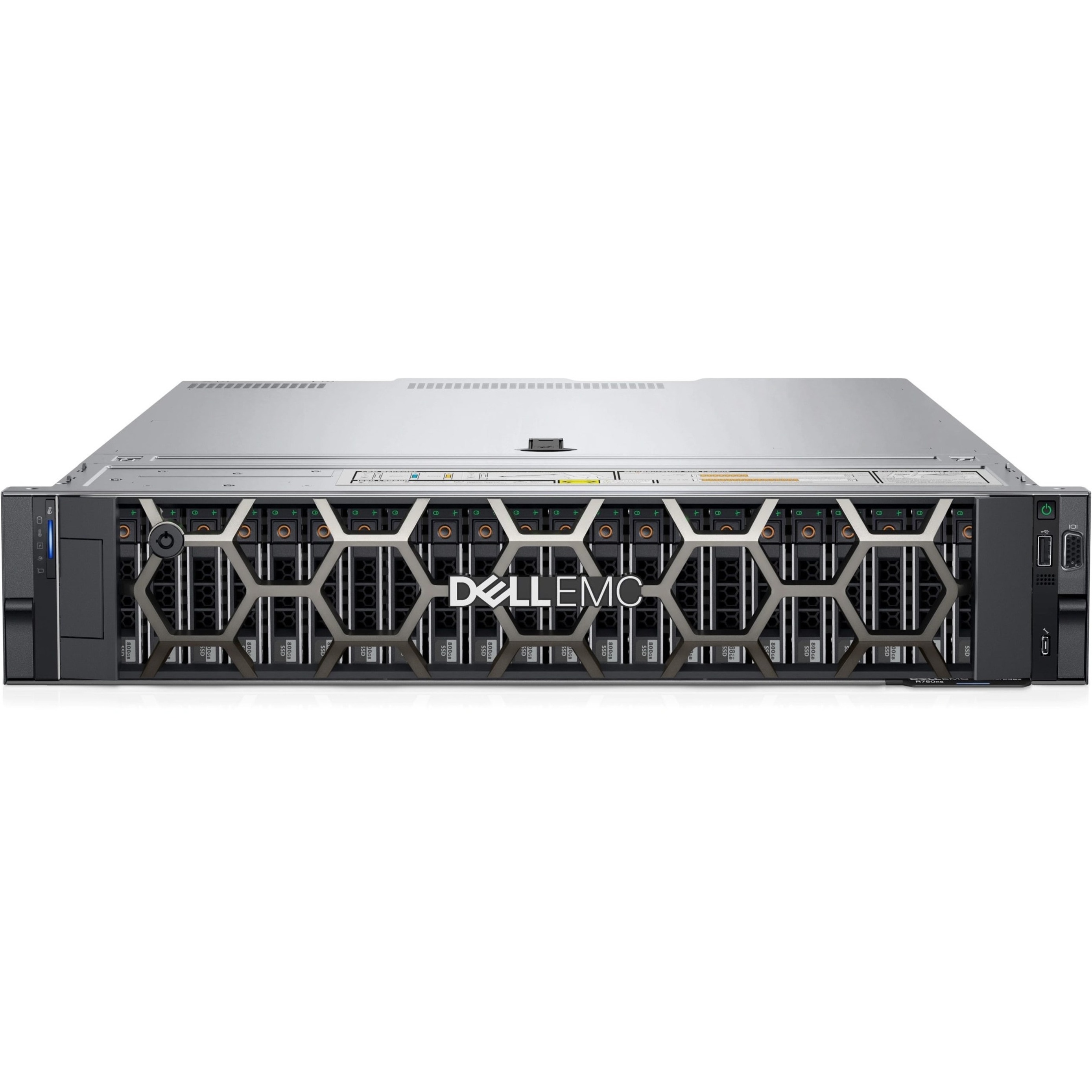
For a five-year federal program starting this fiscal year, the 17G PowerEdge R770 is the safer default and the 16G PowerEdge R760 is the choice you make for a specific reason: matching an installed base, reusing an accredited image, or taking delivery on configurations that are already moving. Compliance is rarely the tiebreaker, because both platforms are commonly available in TAA-compliant configurations, so the real decision is how much support runway you need behind the last unit you rack.
Two questions get conflated on almost every refresh package. "Is it TAA compliant?" is a per-line-item question answered on the quote. "Will it still be under support in the final option year?" is a lifecycle question answered by the generation you pick. Those are separate problems, and they generate separate paperwork.
What actually separates the two generations
The R760 is the mainstream 2U dual-socket rack server of the 16th generation, and the R770 sits in the same slot one generation later, with 1U siblings (R660 in 16G, R670 in 17G) covering density-first roles.
The 17G platform moves to a newer Intel Xeon 6 processor family with newer memory and PCIe plumbing, plus a chassis and thermal design built for higher-power CPUs and accelerators. For most agency workloads the practical effect is consolidation: fewer nodes carrying the same footprint, and more headroom before an analytics or inference project forces another buy.
Exact counts move by SKU and option, so keep the requirement document qualitative and let the spec sheet carry numbers. Side-by-side detail lives on the R760 versus R770 comparison page, and the commercial framing of the same choice is in PowerEdge 16G vs 17G.
TAA compliance is a line item, not a model
The Trade Agreements Act (19 U.S.C. 2501 et seq.) and its implementing clauses, FAR 52.225-5 and FAR 52.225-6, work on end products, not product families. What matters is whether the item you are buying was wholly produced in, or substantially transformed in, a designated country. That test applies to the configuration on the quote, which is why "the R760 is TAA compliant" is not a sentence that belongs in a contract file.
The workable version: both are commonly available in TAA-compliant configurations, and you confirm country of origin per server, per line, on the quote you award.
Three details that catch people:
- Mixed-generation orders need a line for each. Eight R770s for a new pod plus four R760s filling out an existing cluster is two country-of-origin confirmations, not one. Drives, NICs, and GPUs can carry their own origin.
- Section 889 is a different rule. NDAA Section 889 covers named telecommunications and video surveillance equipment. It travels with the configuration too, but a TAA certificate does not satisfy it.
- The Buy American Act is not TAA. Different statute, different test. If your program office cites both, make the acquisition team say which is actually flowing down.
GSA Schedule buys are TAA-covered as a matter of course. Micro-purchases below the threshold generally are not, though agency policy often imposes it anyway. Mechanics are in the TAA procurement guide for federal IT, and the documentation pattern that survives an audit is in building a TAA-compliant BOM.
Lifecycle runway against program length
Dell publishes a defined service lifecycle for each PowerEdge platform, and a newer generation sits earlier in that curve. That is the honest argument for the R770 on a long program: more distance between install date and the end of the support window, not a specific number of extra years. Confirm the current lifecycle status for the platform on your quote and cite that, not an assumed date.
Run the arithmetic against your program, not the hardware in the abstract. A phased refresh finishing in year four is a different exposure than one finishing in year two. Extensions and bridge actions past the last option year are common enough that the spares plan should assume the fleet outlives the base ordering period. And post-support parts availability is where fleets actually break, not the calendar date itself, so that spares plan belongs in the same analysis.
If you are timing this around an aging 14G or 15G fleet, PowerEdge end-of-life and refresh planning covers the inventory work that should come before the generation decision.
Decision table
| Decision factor | PowerEdge R760 (16G) | PowerEdge R770 (17G) | What your file needs |
|---|---|---|---|
| TAA compliance | Commonly available TAA-compliant | Commonly available TAA-compliant | Country of origin confirmed per server line on the awarded quote |
| Support runway | Further along its service lifecycle | Earlier in its service lifecycle | Lifecycle status for the exact platform quoted, not an assumed date |
| Fleet fit | Drops into existing 16G clusters and imaging | Standardizes the pod on current silicon | Whether the ATO boundary or cluster needs a matched generation |
| Headroom | Proven for current virtualization and database tiers | More room per node before the next buy | Sizing tied to salient characteristics, not model names |
| Attestation | Secured Component Verification is an ordered option | Secured Component Verification is an ordered option | SCV as its own line so delivery verification is contractual |
| Year-end sourcing | Established configurations, broadly built | Varies by configuration and options | A lead time in writing before the obligation deadline |
| Price | Configuration-specific, confirm on your quote | Configuration-specific, confirm on your quote | Line-level pricing, no generation-level assumptions |
Writing it so either generation can bid
Brand name or equal descriptions under FAR Part 11 require salient characteristics: the functional and performance attributes that actually matter. Naming "PowerEdge R770 or equal" and stopping there hands the evaluation an argument it does not need.
Write the requirement in attributes you can defend. Rack form factor and depth. Socket count and processor class. Memory capacity and channel population. Drive bay count and interface. PCIe generation and slot count for the cards you already own. Out-of-band management capabilities your operations team actually uses, since iDRAC and OpenManage Enterprise become integration requirements once monitoring is built around them. Power supply redundancy and input voltage your facility can deliver.
State compliance conditions separately: TAA-compliant end product with country of origin identified per line, Section 889 representation, and any encryption requirement carried by the drives. Written that way, an R760 configuration and an R770 configuration can both bid, and you award on price, lead time, and lifecycle fit instead of defending a model number.
For workload-to-platform mapping across the family, see best Dell servers for a federal data center and current rack builds in servers.
Security features against 800-171 and CMMC
Newer platform security helps, and it does not check a control box on its own. NIST SP 800-171 and CMMC assess your organization and system, not a chassis.
Where hardware carries weight is evidence. Secured Component Verification produces a factory-generated inventory certificate you validate on receipt, which is supply chain assurance you can attach to inbound inspection procedures. It is an ordered option, not an automatic inclusion, so put it on the quote as its own line. Details are in Secured Component Verification.
Silicon-rooted boot integrity, signed firmware, and iDRAC system lockdown support configuration management and integrity controls in both generations. Cite them as supporting evidence in your SSP, not as the control itself. Defense programs handling CUI need the full picture documented anyway, which is the work described under defense.
How Uniqcli validates TAA and configuration on your quote
Uniqcli is an independent reseller and systems integrator that sells and configures genuine Dell Technologies products, and the quote is where compliance gets pinned down. On a PowerEdge RFQ we confirm country of origin for each server line rather than for the order as a whole, flag options carrying their own origin, and note the current lifecycle status for the platform quoted so your five-year math uses real information. Mixed R760 and R770 orders come back with each generation broken out, SCV as its own line if you want it, and lead times per configuration.
Pricing is configuration-specific, so it belongs on the quote and nowhere else. Send your requirement, your draft salient characteristics, or just a rack count and workload profile, and request a TAA-validated quote.
Frequently asked questions
Is the Dell PowerEdge R760 or R770 TAA compliant?
Both are commonly available in TAA-compliant configurations, but neither is TAA compliant as a blanket fact. The Trade Agreements Act test under FAR 52.225-5 applies to the end product you actually buy, based on where it was wholly produced or substantially transformed. Origin can vary by configuration, build location, and component. Confirm it per server line on the quote you intend to award, and keep that quote in the contract file.
Does buying the newer generation reduce end-of-life risk for a five-year program?
Yes, in the sense that a newer platform sits earlier in its published service lifecycle, so more of the program runs inside the support window. It does not eliminate the risk, and it is not a specific number of extra years you can cite in a justification. Check the lifecycle status for the exact platform on your quote, then compare it against when the last unit lands and how long the mission runs past that.
Do 17G security features change anything for 800-171 or CMMC?
Not directly. NIST SP 800-171 and CMMC assess your organization and system, so no server generation satisfies a control by itself. What newer platform security gives you is better evidence: Secured Component Verification for supply chain assurance at delivery, plus signed firmware, silicon-rooted boot integrity, and iDRAC system lockdown supporting your configuration management and integrity controls. Cite those as implementing evidence in your SSP rather than as compliance in their own right.
Which generation is easier to source before fiscal year-end?
It depends on the configuration, not the generation. Established R760 builds have been shipping longer, while R770 availability varies by processor, drive, and accelerator choices. Get a lead time in writing for your specific configuration before you commit to an obligation deadline, and ask what happens to that lead time if you swap a constrained component for an alternative that still meets your salient characteristics.
How do I compare the R760 and R770 on a brand-name-or-equal RFQ?
Write salient characteristics instead of model numbers. Specify rack form factor, socket count and processor class, memory capacity, drive bays and interface, PCIe generation and slot count, out-of-band management capability, and power supply redundancy. State TAA compliance with per-line country of origin and Section 889 representation as separate conditions. Written that way either generation can bid, and you evaluate on price, lead time, and lifecycle fit rather than defending a model choice.
Does Secured Component Verification apply to both generations?
Secured Component Verification is available on current PowerEdge rack platforms including both of these, but it is an ordered option rather than something every server ships with. Put it on the quote as its own line for whichever generation you select, and confirm which variant you get and how the certificate is delivered. Then build receipt-side validation into your inbound inspection procedure, because a certificate nobody checks at the dock produces no assurance.