
Dell Precision 3590 vs 3680: Mobile or Tower for Federal CAD
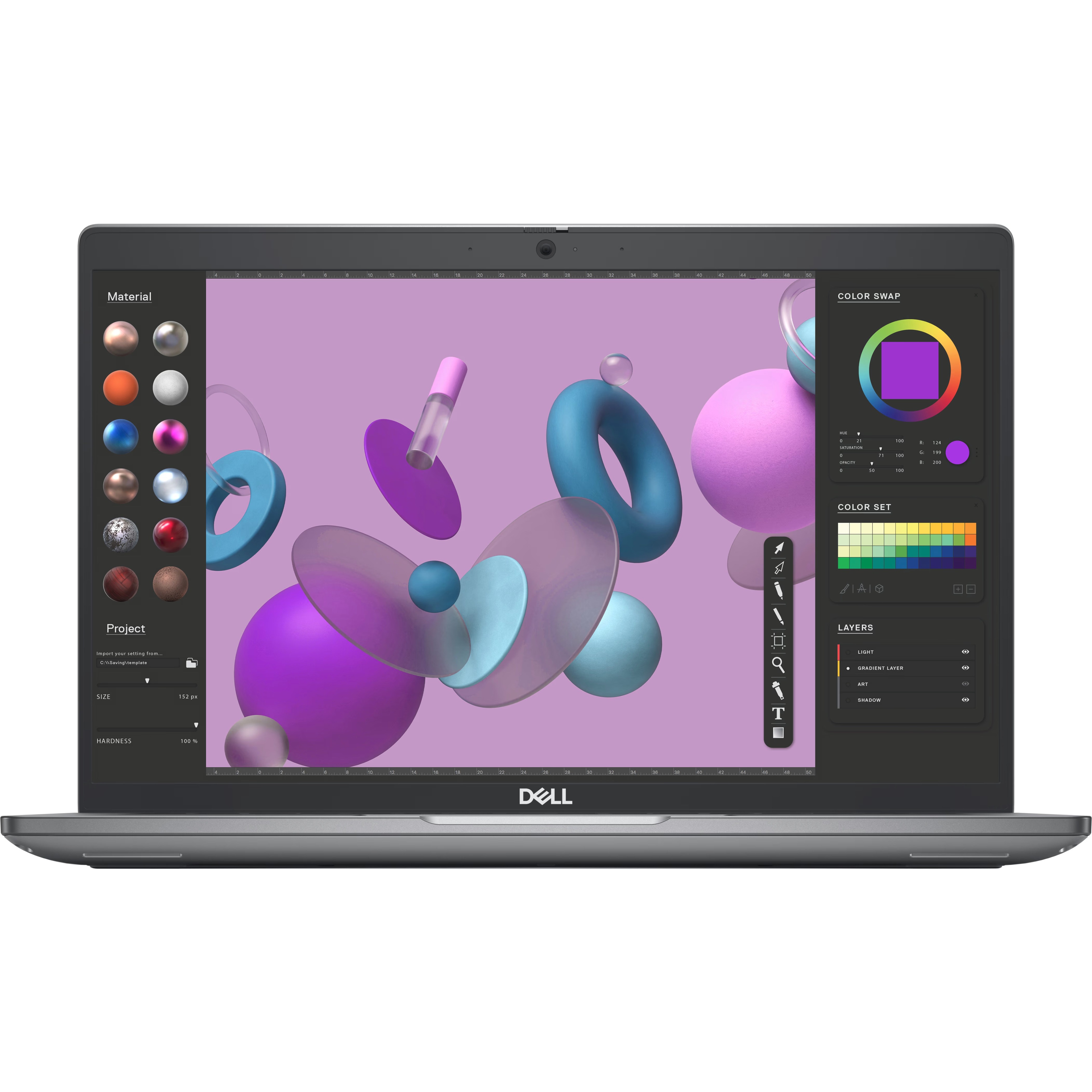
A Precision 3590 mobile beats a 3680 tower when the analyst and the data have to move: field survey, forward site, deployed cell, or a hot-desk arrangement where the workstation goes home in a bag. The 3680 wins everywhere else, because a tower holds a higher sustained thermal ceiling, takes full-height graphics, and never opens the travel and data-at-rest conversation a mobile brings.
Both sit in Precision's entry tier, both are commonly available in TAA-compliant configurations, and both need country of origin confirmed for the exact configuration on the quote. Settle the form factor first; the model number follows.
Decide the form factor before the model number
Engineering shops usually start with model numbers, then discover halfway through the RFQ that the real question was whether the machine leaves the building. The 3590 is the 15-inch entry mobile workstation; the 3680 is the entry tower. Same tier, different physics, and the mobile versus fixed comparison puts the tradeoff side by side.
If the argument is really screen size and carry weight, Precision 3490 versus 3590 settles it, and if it is tower versus a compact unit under a secure-room desk, Precision 3280 versus 3680 covers the difference. If someone is proposing a business laptop with a discrete GPU, Latitude versus a Precision mobile explains where that holds up.
Both are commonly available in TAA-compliant configurations, neither by model number
Precision mobile and fixed workstations are commonly available in TAA-compliant configurations, and federal engineering, GIS, and imagery shops buy both on TAA-covered vehicles. That is as far as the general statement goes.
The Trade Agreements Act (19 U.S.C. 2501 et seq.), implemented through FAR 52.225-5 and certified under FAR 52.225-6, requires each end product on a covered acquisition to be a U.S.-made or designated country end product. For a computer built from globally sourced parts the test is substantial transformation: where those parts became a new and different article with a distinct name, character, and use. Assembly location is where that analysis starts. Customs applies the test case by case, so an assembly address settles nothing on its own; the evidence for your file is the manufacturer's country-of-origin statement for that exact configuration.
One model number can be built at more than one site, so origin is a per-configuration fact, and origin moves over a product's life: last year's confirmation carries no weight for this year's purchase order. GSA Schedule orders are TAA-covered. Open market buys are covered when the acquisition exceeds the applicable trade agreement threshold and the clauses are in the solicitation. Micro-purchases below the threshold are generally not TAA-covered under the FAR, though agency policy varies. The Buy American Act is a separate rule. The federal Dell TAA guide and the TAA procurement guide go deeper.
Sustained load favors the tower, portability favors the mobile
A tower has more air, more power headroom, and larger heatsinks, so it holds high utilization longer without backing off. A mobile does the same work in a chassis you can carry, and that carry weight is what caps sustained clocks.
The practical read: overnight photogrammetry, large raster processing, batch rendering, and heavy assembly rebuilds belong on the tower. Field capture, site walks, briefings, and analysis that happens where the data is collected belong on the mobile. For cores, memory, and storage, use the Precision workstation sizing guide and the compare pages.
Keep ISV certification out of the compliance file. It is a technical question, and Dell publishes certifications per platform, application, and driver version, so confirm the pairing for the version your team runs.
A mobile unit adds a CUI checklist, not a different TAA answer
If your CAD models, site imagery, or geospatial products are CUI, a mobile changes your handling obligations while changing nothing about the TAA test. Control-by-control detail belongs to your ISSO and the system security plan. What lands on the buy side:
- Data at rest. Full-disk encryption on every mobile unit, specified on the quote rather than added after delivery. If policy calls for validated encryption on the drive itself, put it on the line item. Self-encrypting drive options covers what that changes.
- Device tracking. Serial-level receipt, asset tags, and a property record for a machine that legitimately leaves the facility.
- Travel policy. Where the unit may go, what may be resident on it, how foreign travel is handled, whether a loaner goes instead.
- Physical control. Lock slot, privacy filter, and a port and boot policy that survives a hotel desk.
- Recovery. A remote lock and wipe path, and an answer for the unit that does not come back.
A 3680 carries the same encryption and inventory expectations with a much shorter travel section, which is why some imagery shops standardize on towers and issue mobiles by exception, as many defense buyers do.
| Use case | Form factor | Added security checklist | RFQ notes |
|---|---|---|---|
| Desk CAD, BIM, map production | 3680 tower | Encryption and inventory, no travel section | Origin per configuration; monitors are separate end products |
| Overnight photogrammetry, rendering | 3680 tower | Same, plus after-hours physical access | Size for sustained load; a discrete card carries its own origin |
| Field survey, site capture, hot desk | 3590 mobile | Encryption, tracking, travel, recovery | Encryption on the line item; dock and monitors get origin lines |
| Forward-site or deployed analysis | 3590 mobile | Full mobile list, plus loaner and travel rules | Confirm origin and lead time together |
| Mixed shop, both populations | Both, one RFQ | Two checklists, one file | Group lines by configuration |
GPU choice moves the quote and forces a reconfirmation
Changing the graphics option changes the configuration, and a changed configuration needs its origin confirmed again. Treat it like a memory or storage change.
The tower accepts full-height, higher-power professional cards while the mobile is limited to what its chassis and cooling allow, and that limit sets the ceiling on GPU-bound work. A card added to a tower on its own line is its own end product with its own origin question, and no origin claim for it should ride along on the system's confirmation. Pricing on either platform is configuration-specific, so confirm it on your quote.
The tower is the easier brand-name write-up
Both are justifiable on a brand-name basis, with different amounts of writing. The tower's case rests on expansion, sustained thermal capacity, serviceability, and one standardized lab image, all functional characteristics a contracting officer can evaluate directly.
A mobile's case has to justify the mobility requirement itself, and that is where weak write-ups fail. "The analyst travels" reads as a preference. "The analyst performs imagery exploitation at a forward site with no fixed workspace" reads as a requirement. Where a brand-name or brand-name-or-equal justification applies, your contracting officer sets the form and approval level. Give them functional characteristics: ISV certification for the application, firmware security and manageability standardized across the fleet, peripheral standardization, and service coverage. Let the model number fall out of those.
Mixing both in one RFQ
One solicitation, one documentation package, per-line confirmation. Group line items by configuration rather than by user, attach a dated origin confirmation to each one, and give docks, monitors, mounts, and separately quoted cards their own origin lines. The NDAA Section 889 representation applies to the solicitation regardless of form factor. Point your covered-telecom diligence at the parts that carry radios, cameras, and microphones: every mobile has all three, and a tower picks them up when you add a webcam or a wireless card. Keep one clause set and one vehicle. The TAA-compliant bill of materials walkthrough shows the layout.
How Uniqcli validates TAA and configuration on your quote
Uniqcli is an independent reseller and systems integrator that sells and configures genuine Dell Technologies products. On a mixed workstation quote we validate per configuration and per line, never per product family.
For each build, mobile or fixed, we confirm country of origin for that exact configuration against current manufacturer data, date the confirmation, and flag any line we cannot confirm rather than rounding it up to compliant. Separately quoted cards, docks, monitors, and mounts get their own origin lines, and anything with a radio, camera, or microphone gets the covered-telecom check in the same pass. Change a GPU or a drive and the confirmation is reissued.
Browse the workstation catalog, see how we support defense and federal engineering buyers, then request a TAA-validated quote with your mobile and fixed mix, quantities, GPU requirements, and vehicle.
Frequently asked questions
Is the Dell Precision 3590 or 3680 TAA compliant?
Both are commonly available in TAA-compliant configurations, and federal engineering and imagery shops buy both on TAA-covered vehicles. The model number itself carries no compliance status. The same model can be built at more than one site, and origin shifts over a product's life, so compliance belongs to the exact configuration on the date quoted. Ask for a dated country-of-origin confirmation tied to that build.
Which handles sustained CAD and GIS workloads better, the Precision 3590 or the 3680?
The 3680 tower, for anything that runs hot for hours. More air, more power headroom, and larger heatsinks let it hold high utilization without backing off, which is what overnight photogrammetry, large raster processing, and batch rendering need. The 3590 handles the same class of work in a carryable thermal envelope and wins when the work happens where the data is collected.
Does a mobile workstation create extra CUI handling requirements?
It adds handling obligations while leaving the TAA test alone. A unit that leaves the facility needs full-disk encryption specified on the quote, serial-level asset tracking, a travel policy covering what may be resident on it, physical controls, and a remote lock and wipe path. Your ISSO owns the specifics; the buy-side job is getting encryption and tracking onto the line item.
How do GPU choices affect the quote and the country-of-origin confirmation?
A graphics change is a configuration change, so the country-of-origin confirmation is reissued for the new build, exactly as for a memory or storage change. Price moves too, and pricing is configuration-specific, so confirm it on your quote. A card quoted on its own line is its own end product with its own origin question.
Which is easier to justify on a brand-name basis?
The tower, generally. Its case rests on expansion, sustained thermal capacity, serviceability, and a standardized lab image, all functional characteristics a contracting officer can evaluate directly. A mobile has to justify the mobility requirement itself, and vague wording sinks it: describe the work and where it happens, then let your contracting officer set the form and approval level.
Can I mix both in one RFQ with a single documentation package?
Yes, and most engineering shops should. Group the line items by configuration, attach a dated country-of-origin confirmation to each one, and give docks, monitors, mounts, and separately quoted cards their own origin lines. The Section 889 representation rides on the solicitation whatever the form factor, so aim your covered-telecom diligence at the radios, cameras, and microphones in the build. Keep one clause set and one vehicle so both populations are judged alike.